One angler's journey, fly fishing through life

Category: Uncategorized (Page 4 of 5)

A broken stick…

I saw Gabe driving his truck towards me as I took a walk during lunch at work. He stopped when he saw me and after some small talk, asked, “Can you repair a broken fly rod”? I hesitated in responding, then said I had never repaired a rod but would look into it and get back to him.

I’ve built nine fly rods to date, each a better version of the last. With each build I’ve learned new techniques, new tricks of the trade, and more efficient methods. But rod repair was an entirely new frontier.

So I researched it. For one, this repair involved marrying together two broken rod pieces, or so I thought. I later learned, upon receipt of the broken rod, that it was two broken sections of the tip piece of a two piece rod. But YouTube is really a great learning resource. In no time I found very good instruction on the method for repairing a broken rod. The key is the use of a spigot ferrule to rebuild the break.

Mending a fly rod takes time, care, and ultimately a bit of love. Gabe made the mistake of trying to beach a steelhead – a 10 pounder – and he let his non-grip hand slide up the blank to do it – an often fatal error. The butt section of a fly rod is where the power is – increasing leverage up the blank just stresses the upper section of the rod blank.

So I took the broken tip section of the blank, shattered graphite – each section jagged and splintered – and thought, “this should be interesting”. I bought a Dremel to even out the bones of each broken section so they’d join as evenly as possible. The fractures in the graphite traveled up the blank with micro cracks, making it difficult to decide where to draw the line on the repair. Cut more of the blank away and you shorten the rod and subsequently alter the way the pieces fit in terms of diameter, and the action as well. Leave the fracture and wrap up to cover it to a reasonable extent and one is left with the nagging question about how far up the blank the fractures could propagate, and possibly fail again.

I did my best, remembering the pictures Gabe showed me of steelhead caught on that stick, pictures of his young boys gathered about the big fish, smiling and proud of Dad. Gabe explained he’d really like to pass the rod on to his boys while he used the new Aetos he got as a replacement from Fenwick.

Turns out this rod has had half as many lives as a cat supposedly does, it’s lineage starting with a 12 weight of all things with an extra fore grip for saltwater big game that Gabe used to slay big Kings on the Salmon River. Some big King broke that rod, and Fenwick replaced it, as it did time and again for failure on the water. The 12 was replaced with another 12, then an 11, and then the 10 that I had for surgery. Gabe’s last go-round with Fenwick for warranty replacement ended with an 8/9 weight Aetos. But as he said to me, “if I could repair the current rod, why not let it live another life”…

So surgery started with a plan. The surgery consisted of cutting back the damaged blank, fitting it with a spigot ferrule, gluing the sections together, wrapping them like a true ferrule, and sealing / coating the wrap with marine spar varnish.

Since I had nothing to use for a spigot ferrule (i.e., old blanks, broken rods, etc.,), I had to purchase a cheap blank. I chose a 9 foot 8 weight 4 piece fast action fly rod blank. Each spigot ferrule is actually composed of two ferrules; a primary that in this case extended 2″ either side of the break, and a secondary, that is inserted into the primary spigot ferrule and adds extra support to the fly rod’s stress point and helps taper the primary spigot ferrule.

Shown above at the top of this picture is the fly rod with the cleaned up break. Below the fly rod is the primary spigot ferrule that is inserted into the blank, extending roughly 2″ either side of the break when inserted into the blank. The bottom piece is the secondary spigot ferrule that is inserted into the primary spigot ferrule to eliminate the stress point at the fly rod break and help taper the action around the break point.

The secondary (smaller) spigot ferrule is coated with 2 part epoxy and inserted into the primary spigot ferrule. Once the epoxy is dry, the primary spigot ferrule is again coated with 2 part epoxy and inserted up the lower end of the broken blank and this forms the male spigot ferrule.

Shown here is the primary spigot ferrule epoxied in place in the butt section of the broken fly rod. The next step is to epoxy the female ferrule in place.

Once the male spigot ferrule is epoxied to the upper female end of the blank, the joint is allowed to cure. Alignment of guides from both pieces is obviously critical.

The joined rod is shown here – as nicely as the two broken ends can be aligned, there will always be a small gap. The two internal spigot ferrules will allow the joint to work and taper the action.

20+ years ago, fly rod designs didn’t allow for a continuous diameter or taper in the blank. The upper section had to flare dramatically to fit over the lower section and still have enough strength to withstand flexing, so there was often a significant difference in rod diameter from one inch below the ferrule to one inch above it. This led to some sloppy rod action and breakage problems.

The original tip over butt or sleeve ferrule. Note the increased thickness of the ferrule as compared to the blank. This added bulk was needed to prevent the ferrule from failing before the advancements in fly rod design and materials.

The internal ferrule, on the other hand, while more labor-intensive to build, allowed for a continuous diameter from below the ferrule to above because the upper section didn’t have to fit over the entire diameter of the section below it. With more consistent diameters and tapers, internal-ferrule rods provided smoother action. They are still used by some fly rod manufacturers. Scott fly rods, for one, still uses the internal or spigot ferrule on its classic “G” series of medium action fly rods.

A spigot ferrule…

Once both breaks were joined and cured, it was time to wrap over the break. As improved as fly rod design and materials are, wraps are still used to reinforce the female ferrule. In the case of this break, I needed to make sure the female and male ends were reinforced as microcracks at the original break point could migrate under the stress of flexing and eventually lead to failure.

Wrapping started roughly an inch below the break and ended an inch above the break. Once this was complete, I applied 7 coats of Epifanes Marine Spar Varnish to the wraps, beginning with the varnish cut 50% with mineral spirits so it could thoroughly penetrate the wrapping thread. Each coat was allowed to dry 24 hours before the next application. After the final coat, I allowed the rod to dry several days before testing the rod with lawn casting.

Repaired sections of the fly rod shown at roughly 10 o’clock and 2 o’clock in the upper portion of this picture…
Focused picture of one of the repairs, lower right glossy black. In retrospect, I should have used a lighter gray thread and a non-glossy varnish so the repair blended in with the blank better.
Casting the finished rod – the Fenwick HMX 9 foot 10 weight easily laid out 40+ feet of WF10 floating line. While I never cast the original, the repaired fly rod felt beautiful and buttery smooth in hand. My dog, Maddie seems to approve, giving a loud bark at the end!

And so with the rod complete, I handed it back to Gabe, but on one condition. I asked for pictures; smiling faces, huddled about a lake-run steelhead held up high and a 10 weight fly rod in the foreground, a mended soul, a family treasure returned…
Remembering Don…

In memory of Donald A. Calder

A great bass fisherman, an even better fisher of men…

9/5/29 – 8/3/15

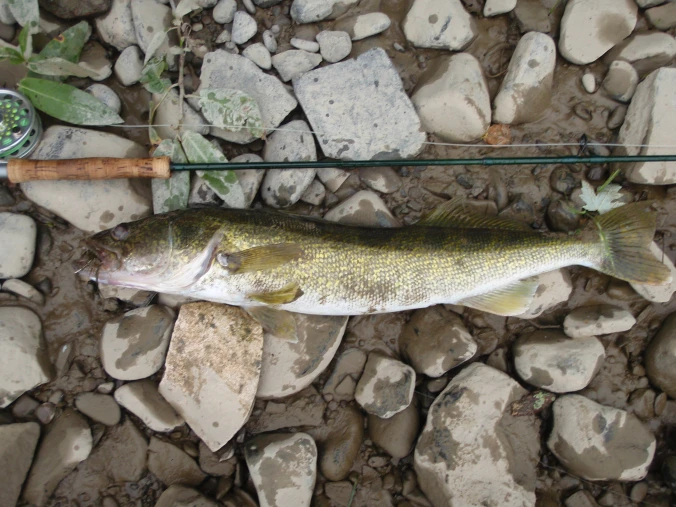
I quartered my streamer up-current and let it sink, dead drift, in the river braid. As it swept past me, I pulled it back in short strips interspersed with a pause – letting the olive marabou and the silly legs of the fly do an enticing water dance. Midway back the fly stopped abruptly and I swept-set the hook. My fly rod took a deep bend with the pull of a solid fish. Nothing exploded skyward on the set, so I knew this was not a smallmouth bass. Whatever this was just throbbed in the current, moving powerfully upriver, then twisting back with random but decidedly heavy surges that tested my drag. The fight continued a time; a tug of war followed by heavy sullen plodding. I started to think I had a big channel catfish on the line.

The fish continued the fight even at my feet, then finally emerged, turning away once more with the slap of its tail. I saw in that boil of river water, green and gold and white and began to wonder about this “catfish.” Then I brought to hand the biggest walleye of my fly fishing life…

OLYMPUS DIGITAL CAMERA

I pulled him up carefully, respectful of his canines and sharp gill plates, and laid him where the river lapped the bank. Standing back with camera in hand, I marveled at his length, the green mottling of his back against golden-hued flanks and his ivory-white underbelly. His river camouflage was that of a warplane – coloring that made him invisible against the sky from below and perfectly invisible against the river bottom when seen from above.

After a quick picture I returned the walleye to the river. With one hand beneath his broad pectoral fins and the other grasping the narrow of his tail, I held him head-up into the current. His gills flared and as I felt the life come back to him, I loosened my grip at the base of his tail. With a strong sway of his head he pulled away and slipped back to the river, swimming slowly across the braid, melting into the bottom. And that is when I remembered Don and smiled to myself at the thought of his disdain for walleyes: “they fight like a bag of rocks”, I’d heard him say on more than a few occasions.

“All Americans believe that they are born fishermen. For a man to admit a distaste for fishing would be like denouncing mother-love or hating moonlight.”

John Steinbeck

It was in August of 2015 that I got a call from Bill – Don’s son and a best high school friend – that Don had passed away from cancer. And so I made my way down to northern New Jersey on a hot humid day to attend his memorial service and to give the family my personal condolences. The service was light-hearted, as I am sure Don would have wanted it. Afterwards, there was a reception at “The Legion”, a place Don frequented to have a beer with old warriors.

IMG_0005
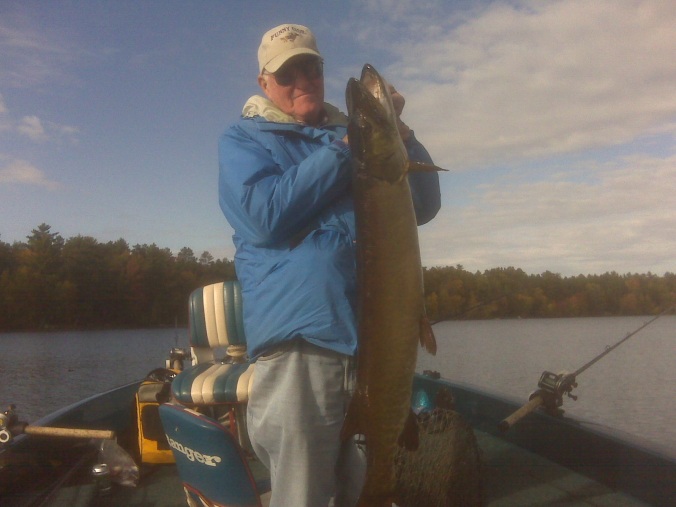
Don with a nice Wisconsin musky…

Now, some 6 years since Don forever hung up his spinning rod, I continue to fly fish and I think of Don. I target the smallmouth bass, my favorite gamefish – and Don’s favorite as well. But us anglers cannot always choose the fish that respond to our offerings. And on that recent foggy summer morning, a walleye took my fly, and Don came down to earth…

A part of my personal philosophy is that fishermen are born but never really die. Those that eventually slip the grips of gravity end up hanging around us, the water-bound, and watch the casts we make. We are reminded of these old fishermen in odd ways. When I am lucky enough on my home water, a nice smallmouth will launch skyward after taking my streamer and will invariably bring a smile to my face just as it did for Don. I pass an angler at the fishing access, enjoying a cold can of Budweiser after a hot day on the river, and I am again reminded of him, a tall lanky guy who sported a ball of a beer belly later in life, and who was rarely seen when land-borne without a Bud in hand. The wind whips up on the river and there he is again – Don just hated the wind, though as a spin fisherman, I never completely understood why – us fly fishers have a bit more of a valid objection. Pike remind me of him too – that peculiar smell of their slime has never left me ever since first landing one on a big Mepps spinner fished from Don’s boat. And of course there are stories from times I did not fish with him – the time Don used a large spring-device to keep a pike’s toothy yap open while removing a hook. After removing the hook, Don released the pike, forgetting that he needed to remove the spring!

Don was more than a fisherman who could tell stories. He could engage one so very well that once he caught you, it was rare you’d ever want to be released from his sense of humor and maybe too, his wisdom. For memories of fish and fishermen have always been magical in their ability to grow larger than life. The smallmouth Don caught and released will always be bigger than my own. This is a fisherman’s right, just as it is to pick and choose the stories that we leave behind. And, as with Don, a fisherman but always first a fisher of men, some of them scorn walleyes…

Memorial Day, Barnegat Bay, and Roger’s River

Oh, I know the sound the river makes,

By dawn, by night, and by day.

But can it stay me through tomorrows,

That may find me far away?

Roger’s River by Ralph D. Conroy

I woke up at 4:30 am on Memorial Day and lay there in bed, knowing I should get up and get going, but after a full weekend of yard work, while the spirit was willing the flesh was weak. ‘Think of what they did on this day’, I thought, and that thought finally ended the fight.

Unlike past years, I would not be fishing Ball Eddy on the West Branch of the Delaware that day. Instead, I had decided to visit my father, a Korean War veteran, and engage in some fly fishing on Barnegat Bay. In the Spring, Barnegat Bay is known for its good striped bass fishing as the bass are migrating northward along the East Coast at this time of year. It’s also a time when “racer” bluefish – referred to as racers because their starved bodies are so thin in comparison to their heads – invade the warmer waters of Barnegat Bay to feed up. Blues can provide outstanding topwater fishing on the flats of the bay.

Most fly anglers know the saying: you fish to the fish’s schedule, not yours. This is particularly true when fly fishing the salt. The tides can make or break the bite as can the wind and water temperature. Fortunately for me, all of these factors were aligned nicely this Memorial Day. I just had to hustle and get out to Barnegat Light before the tide hit slack high.

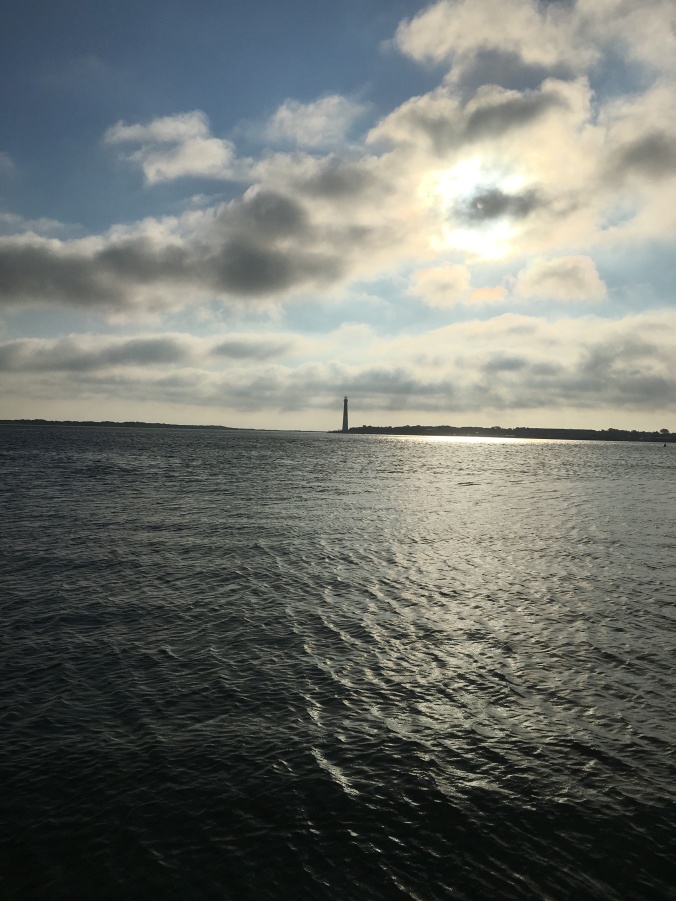
I drove out to the island from mainland New Jersey and crossed the great Barnegat Bay on the Long Beach Island causeway. To my left I could see the bay’s waters stretch seemingly endlessly and in the distance could just barely make out Barnegat Light. The wind was coming out of the northeast and rippled the bay. A grey overcast hung over the water and the island – a good thing for the light-shy bass. I was feeling hopeful.

It’s a 15 minute drive down Long Beach Island’s main boulevard to get to the northern end of the island but it always seems an eternity. On the way, you pass the once sleepy towns of Ship Bottom, Surf City, Harvey Cedars, and Loveladies, and finally enter Barnegat Light – established in 1692 – the town around the lighthouse and the literal end of the road. Then, turning left off the boulevard, you pass the fishing fleet, the party boats, and the charter boats, and make your way to a part of Barnegat Light referred to as High Bar Harbor.

OLYMPUS DIGITAL CAMERA
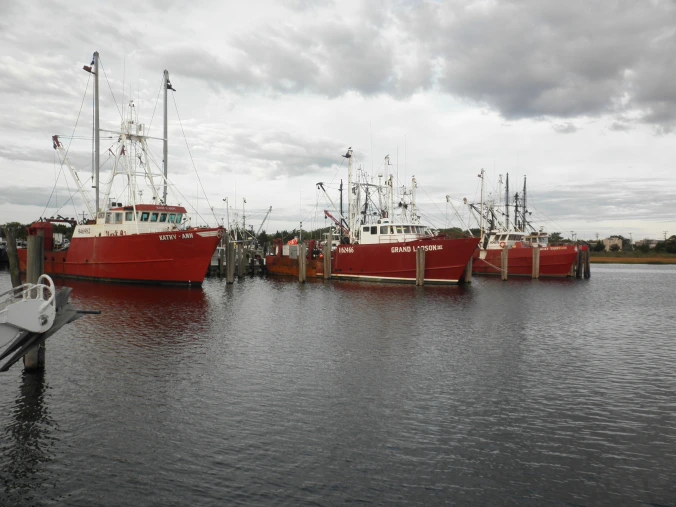
The commercial fishing fleet at Barnegat Light. In the distant background is part of High Bar Harbor and to the right stretching into the bay, lies “the dike.”

Arriving at the state park at the end of High Bar Harbor, I rigged up and set off through a cedar and bayberry canopy and emerged onto a great bay beach, referred to by locals as “the dike.”

staticmap
An aerial view of “the dike” seen as the long thin spit of land that stretches from High Bar Harbor to a sedge island. The dike is man-made of dredge spoils, built to create a harbor and divert tidal flows around the sedge island at its tip. Barnegat Inlet is to the far center right of the picture.

The northeast wind blew gently and immersed me in a bath of fresh salty air. Gulls and osprey soared and wheeled overhead. I had the entire beach to myself and as I walked in the sullen light of that morning, I wondered how it must have been to make a beach landing in war, the air ripped by bullets and filled with the cries of dying men.

It was a 15 minute walk to reach the end of the dike where the sod banks began. The place looked fishy and felt right. The current was flowing like a river along the banks and the water was a beautiful blue-green, reminding me that the emerald beaches of the Gulf have their own beauty but it is not the only beauty that water can have.

I found a point that protected a sandy cut behind it. It looked like a perfect place for bass and blues to set up and ambush or intercept prey.

OLYMPUS DIGITAL CAMERA
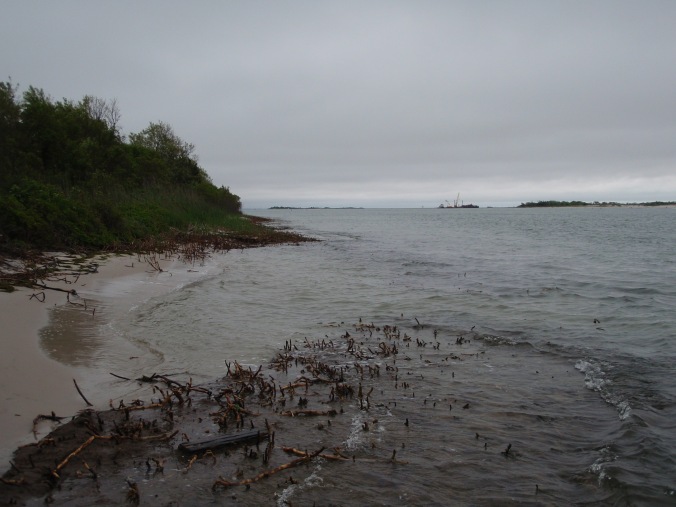
The sod banks…

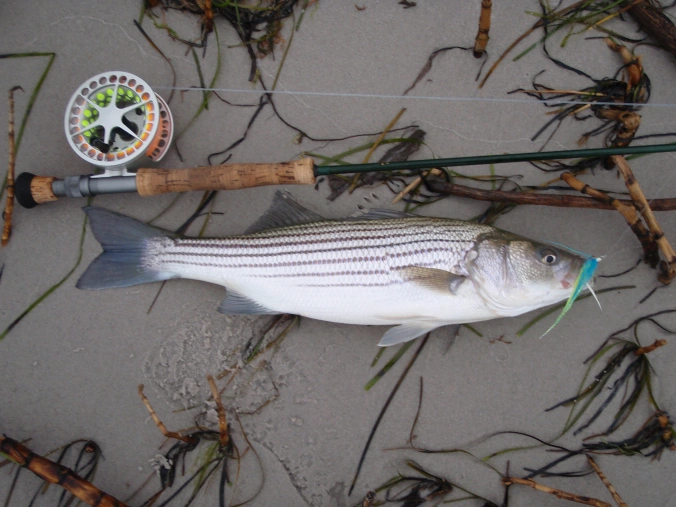
My 8 weight was rigged with an intermediate sink tip line. I tied on a 1/0 chartreuse and blue clouser. Casting slightly up-current just like I would fishing a trout river with a streamer, I let the fly sink, counted down to 10, and began to strip the fly back on the swing. On just the third such cast, the fly stopped with a solid throbbing jolt. The rod tip danced and bowed in a deep arc and I cleared the line and got the fish on the reel. What followed was a good deep fight, filled with head shakes and lunging runs…

OLYMPUS DIGITAL CAMERA
A solid Barnegat Bay schoolie striper complete with chartreuse and blue mustache…

I was elated: this striper was a first on the fly and I caught it using the basics I had taught at a BC Flyfishers meeting held the week before.

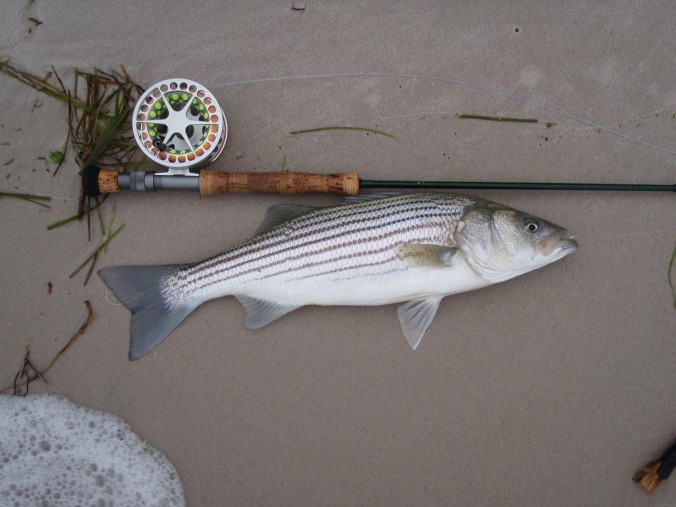
I worked my way up the dike, casting and working the fly deep on the swing. The bass seemed to be holding in close, just off the current, no doubt picking up baitfish and crustaceans flushed loose from the banks by the tidal current. The bite lasted another hour during which I tallied three more nice schoolie bass…

OLYMPUS DIGITAL CAMERA

The current died when the tide reached high slack water and this lull would last a bit before the great bay had absorbed the ocean’s rush and started pushing it back seaward. I decided to pack it in, happy with my success. I had, after all, achieved one of my fly fishing goals; to catch a striped bass on the fly.

The walk and wade back was a long one. I was tired from the morning’s fishing and the soft sand underfoot made the hike all the more taxing but gave me time to once again reflect on the meaning of the day. Just before going to bed the night before, in an effort to calm my excitement over fishing the next day, I pulled out a Field & Stream anthology of short stories. The book seemed to naturally open to a story titled “Roger’s River”. The author, outdoor writer Ralph D. Conroy, was born in 1939, grew up in Massachusetts, and was an Army veteran. Mr. Conroy was a regular contributor to Guns & Ammo magazine, and was also published in Reader’s Digest and Field & Stream. In his short story, “Roger’s River”, the author writes of many themes familiar to stories with fly fishing as a backdrop, but it was the theme of connection and subsequent loss in war that resonated with me most that evening.

The story takes place during the Korean War. The author, recently graduated from high school, ventures afield in the Vermont countryside to set up camp by a river and fish alone. He is a week away from reporting for basic training in the Army and this is his last time to fish before heading off to war. He arrives at a small town and meets another young man who turns out to be a local fly fisherman familiar with a stream close by. The young man’s name is Roger. The two young men only briefly chat before Roger sets off to what the author later describes as “his river.” This is the only time the two men actually talk to one another in the story.

The author sets up camp that evening and hears the distant wail of a harmonica as he sits by his campfire. The next day he discovers Roger’s camp – neat and orderly – as he returns from fishing the river. There he finds the makings of a poem scribbled on some paper that hints that Roger too, will soon be off to war. After packing up, the author has the feeling that he is leaving more than the river behind.

Fast forward a year and the author is back home from his tour of duty in Korea. He returns to Roger’s river and finds Roger’s camp a mess – littered and in disarray. He leaves the camp on a mission to find out what may have happened to Roger. Courtesy of a local gas station attendant, he locates Roger’s house and meets his father, who reveals that his son had died in a helicopter crash in Korea a week before he was supposed to come home.

Over 54,246 men were killed during the Korean War with 7,704 still unaccounted for as of 2021. As I walked up the beach to the wood line of bayberry and cedar that marked the path out of the dike, I remembered the prose of Conroy’s story, recalling the meaning it carried, like the clarion call of taps in the evening. I thought of those lost in that war, like Roger, who may have carried a fly rod to cherished water, fished it one last time, and then left it behind for a higher calling. I stopped, took pause to view the bay, then turned and left it behind me, feeling fortunate for the morning’s fishing, but more so, for what they gave so that I could return to my own river and fish another day.

Lasts…

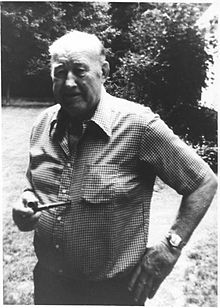
In memory of John Raymond Hatfield…
1928 – 2004

The salmon were in. From above the tail-out of Plumber’s Pool, I saw them; a big hen holding over a bed of gravel and a handsome buck guarding her as jack salmon took turns trying to dislodge the larger suitor. The water suspended them in its glassy flow, a gift from the river’s far reaching fingers. Just upstream, a towering falls thundered, casting its froth to the wind and cooling the air even more than it should in late autumn.

OLYMPUS DIGITAL CAMERA

From my perch on the bridge, I watched an angler emerge from the scrub of the river bank to fish the pool. He shuffled with elder steps, his stooped posture and bowed head that of a blue heron in stalking. His long mane, white as the falls-cast spray, whipped in waves as the wind buffeted him. He tried in vain to cast high enough into the pool to allow his streamer to sink well before the tail-out. His casting stroke was slow and deliberate – his long rod moved the way it should – but the wind overcame his frailty. Wise in years, he moved upstream and deeper to improve his position, but the unyielding current rebuffed him even as he leaned into it with his wading staff.

The angler’s struggle brought thoughts to mind of my late father-in-law, Ray. I could see his shadow looming through the translucent glass of a doctor’s office door. Framed in rich mahogany, the scene played out: an upright shadow approached, leaning down to him, speaking in hushed tones. At the age of 58, Ray listened to his doctor give the final prescription: he should retire and live out as many years as he could before his failing lungs took their last breath.

Silent to a fault and with a stiff upper lip, Ray never showed what likely ate away at him during those final years. He did the best he could with his sentence, retiring early, and building a house on the ninth hole, a place he duly deserved after 30 years of commuting from New Jersey to New York City while raising 6 kids, living, loving, and perhaps, wanting a bit more. Golf had somehow eluded the busyness of working life, so those first years of retirement were lived deliberately, ushered in with late morning risings, choice tee times, and capped with sunsets and vodka gimlets, both welcomed but measured. Eventually, however, the doctor’s words cast their pall and one day on the very course that hugged his retirement dream home, a final swing was made.

Now, as I approach that same age, I think of my father-in-law sitting before the doctor, the scene that we watch in our own way and that all of us must act in at some point in our lives. Golf, fly fishing – life itself – is a continuum of firsts punctuated by an inflection point, where lasts begin.

And so I watched the elderly angler finally give up the ghost. He looked up at me, as if cursing fate, his mouth gaping open and ringed white from exertion. He ambled into the riverside brush and I followed with my own retreat to a warm car. Fall waned that day and winter waited hauntingly in its wings. And I wondered as I walked away; would he remember his last cast, and would I, my own?

Auld Lang Syne

I might as well have been named after him for the countless misspellings of my last name. Most know this man – Scotland’s favorite son, the Ploughman poet, and The Bard of Ayrshire – not so much by his poems but by the Scottish folk song, Auld Lang Syne.

Kilt-wearing namesake?

Robert Burns is said to have collected some of the lyrics of this song from an old Scot and then composed other parts himself. For those who have tried to sing it whilst imbibing in champagne and bringing in the New Year, here’s the English translation:

Should old acquaintance be forgot,
and never brought to mind ?
Should old acquaintance be forgot,
and old lang syne ?CHORUS:For auld lang syne, my dear,
for auld lang syne,
we’ll take a cup of kindness yet,
for auld lang syne.

And surely you’ll buy your pint cup !
and surely I’ll buy mine !
And we’ll take a cup o’ kindness yet,
for auld lang syne.CHORUS

We two have run about the slopes,
and picked the daisies fine;
But we’ve wandered many a weary foot,
since auld lang syne.CHORUS

We two have paddled in the stream,
from morning sun till dine;
But seas between us broad have roared
since auld lang syne.CHORUS

And there’s a hand my trusty friend!
And give us a hand o’ thine!
And we’ll take a right good-will draught,
for auld lang syne.CHORUS

This great work poses a rhetorical question as to whether it is right that old times be forgotten. 2020 was certainly not the year I nor anyone else thought it would be – COVID really put a cramp on fishing with others, limited travel outside of New York, time with loved ones, and caused much suffering and death. If any year should be forgotten, it should be 2020, and yet, I choose to not forget the year and instead remember those good days on the water. To wit:

  • Fishing a fantastic pre-spawn smallmouth bass bite. A low snowpack and less than average precipitation led to wadable flows in late April and early May…
  • Having a 23″ brown take a streamer intended for a smallmouth in the lower Tioughnioga. This was a shocker – never thought browns could survive this low in the Tioughnioga River.
  • Enjoying some spring largemouth bass, feeding up…
  • Experiencing the beauty of the West branch of the Delaware…
  • Hooking a personal record number of big carp, all caught on streamers, while fishing on the Tioughnioga River…
  • Landing a big fallfish on one evening late summer outing – a welcomed surprise. I love catching fallfish but I’ve not come across a lot of these guys lately and I’m not sure why. In years past they were a regular customer when fly fishing for smallmouth bass.

Life should be held close and kept dear and of all people who’ve roamed this good earth, I’m sure Robert Burns would agree. He died at the young age of 37 but he lived the years he was given fully and wrote prolifically, even while struggling to make a go at farming to support his family and his writing. The fact that he fathered nine children in his marriage and others outside of marriage certainly didn’t help his financial situation (to which my grandfather would have commented; “he should have danced all night”). At least he did have the sense to lease a farm at Ellisland, through which the River Nith flows. There’s no evidence the Scot poet ever fished the river, known now for a nice run of Atlantic Salmon, but it’s lovely waters didn’t completely escape his eye. Burns is reported to have written to a friend: “The banks of the Nith are as sweet poetic ground as any I ever saw”.

Robert Burns wrote over 130 songs and poems – a staggering 25% of his short life’s output – in the 3 years that he lived at Ellisland and among these works was Auld Lang Syne. He sold his lease at Ellisland in 1791, finding the farmland’s stony, infertile, poorly dressed and badly drained soil too challenging to make a profit, and died 5 years later of rheumatism.

Mmmmm – Scotch, Haggis, and Auld Lang Syne…

I’ll close this with another version of Auld Lang Syne, a favorite of mine, attributed to James Watson (1711). Here’s to past days upstream, and to better days downriver…

Should old Acquaintance be forgot,
and never thought upon;
The flames of Love extinguished,
and fully past and gone:
Is thy sweet Heart now grown so cold,
that loving Breast of thine;
That thou canst never once reflect
on Old long syne.CHORUS:On Old long syne my Jo,
in Old long syne,
That thou canst never once reflect,
on Old long syne.

My Heart is ravisht with delight,
when thee I think upon;
All Grief and Sorrow takes the flight,
and speedily is gone;
The bright resemblance of thy Face,
so fills this, Heart of mine;
That Force nor Fate can me displease,
for Old long syne.CHORUS

Since thoughts of thee doth banish grief,
when from thee I am gone;
will not thy presence yield relief,
to this sad Heart of mine:
Why doth thy presence me defeat,
with excellence divine?
Especially when I reflect
on Old long syneCHORUS

Hold life close and dear, my friends. Tight Lines, and Happy New Year…

Mankind is our business…

My kids roll their eyes when I break out “A Christmas Carol” this time of year. I do it because it’s a favorite story of mine and one in which Dickens does a superb job relaying what the season should be all about: “keeping” Christmas in our lives. And he ends the story with a message of hope and redemption – that if we have not kept Christmas, it is never too late.

I read once that Dickens was inspired to write the story after a bout of writer’s block. Mounting debts and financial pressures were bearing down on him, so he began to walk the streets of London at night, hoping to break his spell. Some of these walks took him through poor  areas of London where he began to witness the dark side of poverty, and worse yet, children forced to work in horrid conditions. These experiences led to the story, “A Christmas Carol”.

Perhaps the most important line in the story comes about as Scrooge is confronted with the ghost of his long-time business partner, Jacob Marley. The ghost bemoans his past as a mortal to which Scrooge replies, “But you were always a good man of business, Jacob”. The response is arguably the best line in the story:

“Business!” cried the Ghost, wringing its hands again. “Mankind was my business. The common welfare was my business; charity, mercy, forbearance, and benevolence were all my business. The dealings of my trade were but a drop of water in the comprehensive ocean of my business!”

“Mankind was my business…”

Sobering, Marleys’ words are. How often, in our own eagerness to seek the relaxation and pleasure of angling a-stream, have we not kept Christmas? How often have we helped the community-at-large in some way beyond our own wants? Have we ever taken a kid or adult – someone in need – to the beautiful places we fish? Have we been kind to fellow anglers, considerate to others, and patient? How have we used the wonder of fly fishing to better the world? Have we “kept” Christmas in our angling, and beyond that, in our lives, and if not in the past, can we commit to it in the future?

So, fellow flyfishers, I urge each of you to pick up “A Christmas Carol”. Draw up near the fireplace, book in hand, and drink of its wisdom. Then carry it with you this year – grace each river and stream you cross with it. Be truly, a better angler…

Merry Christmas and God Bless Us, Every One!

Home with the water…

Having harbored two sons in the waters of her womb, my mother considers herself something of an authority on human foetuses. The normal foetus, she says, is no swimmer; it is not a fish-, seal-, eel-, or even turtlelike: it is an awkward alien in the liquid environment – a groping land creature confused by its immersion and anxious to escape. My brother, she says, was such a foetus. I was not. My swimming style was humanoid butterfly-, crawl-, back-, or breaststroke: mine were the sure, swift dartings of a deformed but hefty trout at home with the water, finning and hovering in its warm black pool.

The River Why, David James Duncan

My mother never really fished. I recall one story from the days when she was dating my father when they took a day trip to fish for cod but I’ve never seen her with rod in hand – not even a picture. No, she was not a fisher, but she brought me into this world, on a dark and stormy night in early March – the month of the sign of Pisces. She let me emerge from a warm pool that kept me safe and formed who I am today.

At a young age I was already wading a nearby brook catching all the squirmy things I could with my hands and a bucket, returning home wet and dirty but all smiles. On trips to the shore, it was sandy seashells and jellyfish that my mother allowed in the bathtub of our motel room, despite the protests from dad. She always put fishy things under the Christmas tree. And when I ventured forth as a boy to test the waters with rod in hand, she ensured I was dressed for the weather, properly stuffed with a hearty breakfast, and drove me to all the places I wanted to fish – the Saddle River, Wood Dale Pond, the Woodcliff Lake Reservoir and countless others places in suburban New Jersey.

Then I went out into the world and fishing expanded for me. I fished big rivers, water that went on to the horizon, places beyond my little land of upbringing, places where the little hands and buckets and zebcos of my youth would never have been enough. But always I would return to my mother and father – holidays, birthdays, Mother’s and Father’s Days, and on some occasions just to visit and fish Barnegat Bay, where my parents retired. Even then, my mother was up early to make breakfast, prepare a lunch, and cook or help cook whatever I caught. Every time I visited them, there was a copy of the local fishing paper waiting for me along with clippings of fishing reports from the Asbury Park Press.

Now, some 60 plus years since I emerged from her, I am still at home with the water, but sadly, my mother has passed. There are no more fishing papers waiting for me when I visit, and the house, attended by aides for my ailing father, is just not the same. It is not home as I knew it and I loved it.

Down deep, that pool of life – the very one that nourished me and kept me safe before – has ebbed, but a flood tide of love, the same one that brought me to my watery world, still runs strong in my heart.

barnegat light

I remember it when I fly fish the bay. The moon and the earth do their thing and as sure as fall sets leaves on fire, the water turns, from the emptying as life does for us all, to the flooding, the filling, and the rising tide that brings life back to the bay. That is when I remember Mom. She always flooded my very being, my heart, even now…

I miss you Mom…

A fly fisherman’s Thanksgiving – there’s not enough lifetime…

A recent post on a popular fly fishing website reminded of something I’m very thankful for this Thanksgiving: our endless opportunity as fly fishermen. While it is easier and easier these days to decry what seems like our nation’s going to hell in a hand basket, I can and will, with drumstick in hand, be thankful for the fact that there’s too much water to cover.

Consider this quote from Andy Mill’s well-written interview post about tarpon fly fishing guide Steve Huff:

“It makes me crazy when people say, “Oh. I know the whole Islamorada area.” You know what? Nobody knows this stuff. I mean they do not fully know it. You could never know it. There is not enough lifetime to really know it all, especially here in the Everglades. There is not enough lifetime“.

There’s not enough lifetime. We fly fishers should always be thankful for that.

I am thankful for the fact that I can fish an entire day on the Susquehanna, the Tioughnioga, the Chenango, and so many more rivers, and never see another fisherman.

The Susquehanna River

I am thankful that I can rise early and spend time over a steaming cup of black coffee, and still not know where to fish, so vast are the choices. I am thankful for the spring days, when mayflowers abound…

West Branch of the Delaware in Spring

and I can’t quite decide whether I should fish for pre-spawn smallmouth, or the wild rainbows and browns of the Delaware.

A West Branch Delaware River brown…

I am thankful that I can fish coldwater and warmwater, moving water and stillwater, freshwater and saltwater, in the same weekend.

Party boat fishing at night for blues off New Jersey…

And I am thankful for the spawn, and the great fish that are driven up small creeks to pass on their noble heritage.

A landlocked salmon caught from Fall Creek…

I am thankful for the endless drive of Mother Nature – for nature’s drive to procreate, for the force that fishes have to feed, and for the excitement these forces can cause. I am thankful for everything that depends on water – eagles, heron, wood ducks, mergansers, deer, otter, beaver and bear. I am thankful that they too are drawn to water.

At the end of an early morning on the river, with the fog lifting, and the day just starting for most in this world, I can’t stop pinching myself for the very fact that there’s not enough lifetime.

Happy Thanksgiving…

The fly fisherman and the boxer…

It’s odd how disparate interests sometimes fire randomly like so many synapses in our brains and connect in new and interesting ways.  Consider, for example, my interest in fly fishing and the sweet science: boxing.  If you’ve read my “about” page, you already know that I’m the lone fisherman in my genetic line, save the possibility of some great uncles on my mother’s side who headed out to Montana in the early 1900’s.  Whether they ever wet a line on the great rivers is unknown, but the thought consoles me in my fly fishing addiction.

Boxing is another story, one that’s a little more understandable in that my maternal grandfather, who passed long before I came into this world, was apparently quite the fan (being Irish descent didn’t hurt either).  My mother told me of his interest only when I revealed my own love for the sport. She recounted his sitting by the radio, listening to the great bouts of Dempsey, Braddock, Louis, Baer, and undoubtedly, Jack Sharkey, the only man to have fought both Jack Dempsey and Joe Louis.

Sharkey-8
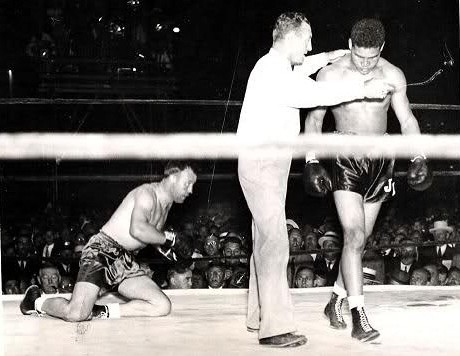
Joe Louis is sent to a neutral corner after dropping Jack Sharkey. Louis would prevail after knocking Sharkey down 4 times. It was Sharkey’s last fight in the ring – August 18, 1936.

Jack Sharkey was born Joseph Paul Cukoschay on October 26, 1902, in Binghamton New York.  The son of Lithuanian immigrants, Sharkey left the family home in New York when he was a teenager, ending up in Boston. Sources report little of his early life until, at the outset of the First World War, teenaged Joseph repeatedly tried to enlist in the Navy. Turned down because of his age, he was not able to enlist until after the end of the war.

“Every time Louis hit me, he said, ‘Sorry.’ Every time Jack Dempsey hit me, he said, ‘How come you’re not dead yet?’”—Jack Sharkey

Sharkey wasn’t much of a fighter growing up – it wasn’t until he served in the U.S. Navy that Sharkey first stepped into a boxing ring, and that was only because a midshipman told him to substitute in the next fight at a Navy smoker or he wouldn’t get shore leave. Tall and husky, Jack quickly established a reputation as the best boxer aboard any vessel on which he served. Sharkey stood 6′ and had a notable 76″ reach. During his brief returns home to Boston he took part in his first fights for pay, the first on January 24, 1924, against Billy Muldoon, whom he knocked out in the first round. By the time of his honorable discharge just short of a month later, he had won a second fight and was already earning write-ups in the Boston papers.

Interestingly, a promoter declared his Lithuanian name unusable and so Joseph Paul Cukoschay became Jack Sharkey – “Jack” after Jack Dempsey and “Sharkey” from ‘Sailor’ Tom Sharkey, who fought Jim Jeffries to a 25-round decision for the heavyweight title in 1899.

“Who hit me hardest? Dempsey hit me the hardest because Dempsey hit me $211,000 worth while Louis only hit me $36,000 worth…”

Sharkey’s career statistics show an admirable record of 37 wins, 13 defeats, and 3 draws. One of his most noteworthy fights was against his “namesake”, Jack Dempsey, on July 21, 1927 in Yankee Stadium. Despite out-boxing the “Manassas Mauler” for 5 rounds, Sharkey lost the bout in the 6th round.  “I turned to the referee to complain I was getting hit low, and I got hit with a haymaker,” he once recalled. “That was that. I was out on the canvas.” “I came home and I went in the hospital,” Sharkey recounted more than 40 years later, in Peter Heller’s, In This Corner (1973). “I passed blood there for a long time . . . this is never brought out in print, the after-effects of a fight. You dry out like a lightweight, you’re dehydrated, pains that you have, you come home you soak in a tub full of Epsom salts, the pain and the aches. No one knows what a fighter goes through after the fight.”

When asked why he had hit a man who wasn’t looking, Dempsey replied, “What was I supposed to do, mail him a letter?”

Sharkey is remembered less for his title victory over Max Schmeling than for the controversial manner of his defeat to the ‘Ambling Alp’, Primo Carnera, in his first defense in 1933. Carnera, whose enormous size had been caused by a boyhood glandular disorder, was controlled by racketeers and had been built up through fixed fights. Carnera was thought to be an easy mark for Sharkey. But in the sixth round Sharkey went down from a punch which many ringsiders claimed they did not see. For the rest of his life Sharkey would face claims that his loss was rigged.

His final fight was against the up and coming Joe Louis. But this was 1936 and Jack Sharkey didn’t have the same legs, and Louis was a different kind of destroyer entirely. From the start of the fight, Sharkey foolishly waded into Louis’ punching range and found himself on the canvas three times before a combination put him down for the count in round three. Sharkey said to W.A. Hamilton after the fight, “Louis convinced me that I have no business in trying to continue, and now I am relegated with the others before me who tried to cheat time and nature only to be revealed in their true light.” After being knocked out by Joe Louis in the third round Aug. 18, 1936, Sharkey retired from the ring to open a restaurant in Boston and pursue his love of fishing.

2wclbht
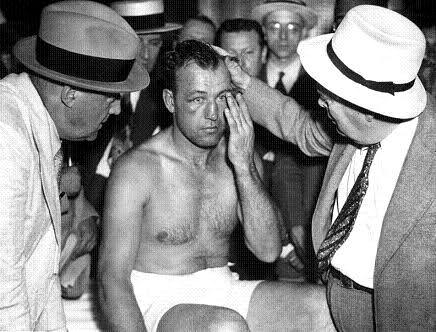
A beaten Jack Sharkey decides to hang up his gloves after losing to Joe Louis.

Sharkey was and has been largely considered second best, however unfair that may be. He was, after all, a fisherman who found himself lacing up a pair of boxing gloves by accident, not a desperate pug who had nowhere else to go. That he made it into the big leagues of boxing is considered by many, incredible.

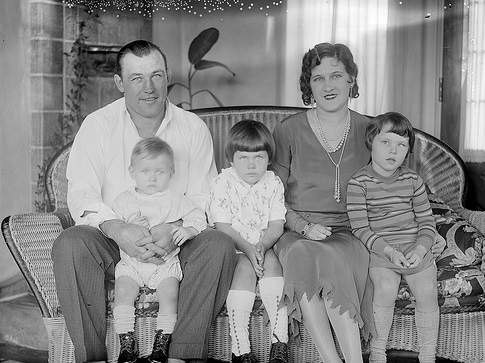
family-and-Sharkey
Boxer, fly fisherman, family man…

“I started out as a fisherman,” Sharkey told The Ring in 1979. “When I was a kid I used to catch bass with my bare hands and sell them. Old-timers still remember me walking down the street carrying eels on my back.”

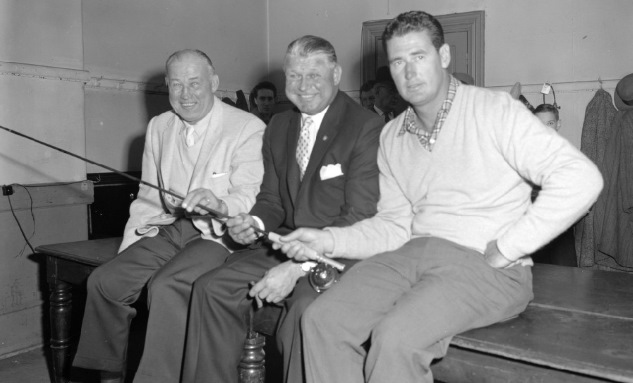
Sharkey acquired further fame in retirement from his exploits as a fisherman who could land a fly on a dime. Jack Gartside, noted fly-tier and author of many angling books, said he lived a dry-fly cast away from Fenway Park in the 1950s when Williams and Sharkey were demonstrating fly casting at a sportsman’s show in Boston. “When I was 8 years old, I was at a sportsmen’s show at the old Mechanics Hall in Boston. Ted Williams and Jack Sharkey, the boxer, were conducting fly casting demonstrations,” Gartside said. “After the casting, they both went to a booth to tie flies.”

jack-sharkey-jimmie-foxx-ted-williams
Sharkey, pictured left, sits with Jimmie Foxx (center) and Ted Williams (right) at a fly fishing exhibition.

One New Hampshire angler who replied to my request for information on the boxer / fly fisher said Sharkey was a hell of a fly fisherman. This man’s father fished with Jack on occasion and staked out his own spot on the bridge at Alton Bay, but woe betide the flatlander who took Jack’s spot! Sharkey was known to be irascible and cantankerous, particularly in later life.

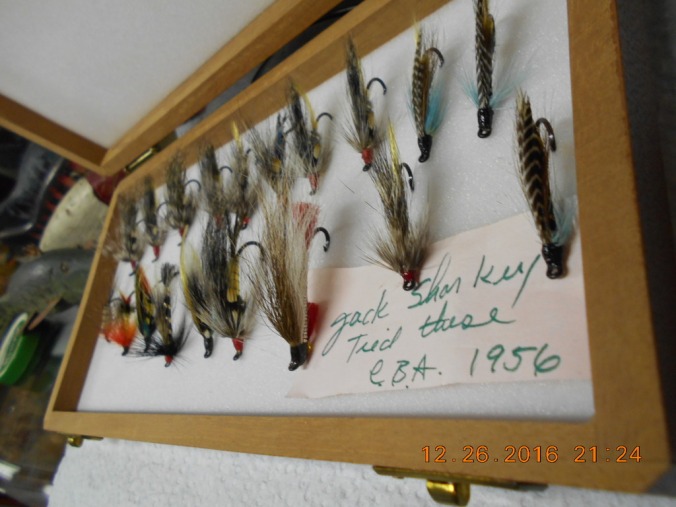
DSCN1814_zps04vlhc2c
Sharkey could tie – no small feat for a guy whose hands went through a lot of abuse in the ring!

Sharkey was Ted Williams’ fishing partner for many years. When asked which he liked better, boxing or fishing, Sharkey replied, “Fishing, it doesn’t pay as much but then the fish don’t hit back.”

12796

Jack Sharkey had his last “boxing” contest with Max Schmeling decades after leaving the ring. Jack held the record as the oldest living former heavyweight champion, living to the ripe old age of ninety-one, only to be beaten by Schmeling, years later, who lived to be ninety-nine.

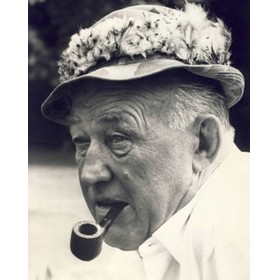
Juozas_Žukauskas

Boxing and fly fishing may seem odd bedfellows, and many might question my sanity as a follower of both sports, but after reading about Jack Sharkey, I’m feeling a bit better about fist and fly. In a sense, Jack Sharkey, our own Southern Tier hometown hero, battled for a living but lived for fly fishing. And isn’t that what most of us do in a figurative sense in our own lives? Sharkey, in my opinion, was a hero for the everyday sportsman – the guy who slogged it out in the trenches, just to marry, raise a family, and maybe, just maybe, eke out a little time with the long rod on a pretty river. Rest in peace, Jack…

Refresh: The Salmon River Conversion to Darn Tough Socks

In a scene from the movie “Forrest Gump” – a Southern Tier Fly Fisher favorite – Forrest and his good friend Bubba are introduced to Lt. Dan Taylor, their platoon leader. Lt Dan, as he is referred to by Forrest, is a pretty straight-forward type of military leader who instructs his “FNG’s” in a few basic essentials on his way to visit the hooch. Among his words of advice is the following:

“There is one item of G.I. gear that can be the difference between a live grunt and a dead grunt: socks, cushioned sole, O.D. green. Try and keep your feet dry. When we’re out humpin’, I want you boys to remember to change your socks whenever we stop. The Mekong will eat a grunt’s feet right off his legs.”

LtDansocks

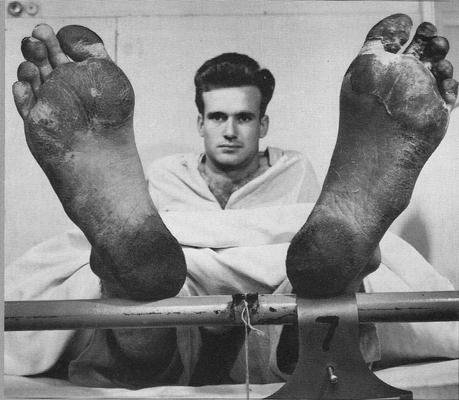
Most of us anglers have some idea of the importance of Lt. Dan’s advice. Socks can make a huge difference to the fly fisherman, particularly in cold weather. For soldiers in combat, proper foot-wear is even more critical. Trench foot may be the best example of what happens when soldiers don’t take care of their feet in the field. Caused by prolonged exposure of the feet to damp, unsanitary, and cold conditions, it can be prevented by keeping the feet clean, warm and dry. Trench foot was first noted during the retreat of Napoleon’s army from Russia but it was the horrid conditions of the trenches in World War I that brought it to the attention of the medical profession. A key preventive measure that was implemented during that time was regular foot inspections by officers. It was also encountered in WWII, and in the Korean and Vietnam Wars. Trench foot even made a reappearance in the British Army during the Falklands War of 1982. The causes were the same: cold, wet conditions and insufficiently waterproof boots.

A WWII GI with a bad case of trench foot.

So feet, it turns out, are of high interest to the military to this very day. A work colleague of mine recently told me of his time in the Marine Corps – where he and his platoon would do forced marches and then be told to sit down roadside and remove their boots and socks for a foot check by a navy corpsman…

uncover... feet!
Foot inspections – a preventive measure…

The lesson learned through all of these wars is the same: take care of your feet by wearing good quality socks and change them as often as necessary…

When it comes to good quality socks, there’s a pretty big selection out on the market these days. One could purchase a pair of authentic Vietnam-era socks, the very socks Forrest Gump would have worn in the Mekong Delta, for example.

Straight from ebay...
Straight from Ebay…

The socks pictured above are the real deal – original unissued Vietnam era olive drab green, wool cushion sole socks made of a mixture of wool, nylon & cotton material and available on Ebay for the nostalgic fly fisherman. While wool is a great material for its wicking and drying capabilities, the use of cotton these days is a big no-no. Cotton tends to absorb moisture, saturate quickly, and dry slowly – a perfect recipe for blisters and worse!

Forrest, Bubba, Tex, Cleveland, Phoenix, Detroit, Dallas, and Lt. Dan would have been a whole lot better off with today’s sock which include advanced synthetics and fine grades of wool, such as merino wool.

So what would I recommend to these men or anyone venturing forth in the cold and damp? Darn Tough is the brand of sock I like. I was sold on them after spending a rather bitter winter afternoon watching my son play hockey up in Pulaski, NY, where the indoor rink temperature seemed colder than it was outside! I stood there in full shiver along with the other hockey parents – all of whom were doing the same – with one exception. Rich, who works as a NYSEG Lineman, seemed unaffected by the arctic air. He watched the game without one shake from the cold. By the end of the first period, stepping out to the concession area for hot coffee, I had to ask…

“I always used to get cold feet” he confided to me  when asked why he appeared Eskimo-like in the midst of Frigidaire conditions. As a lineman, he explained, he was frequently up in the bucket in some pretty bad weather. And he was tired of being miserable because of his feet. He searched a while for a better sock, and found them in Darn Toughs. He added that they were pricey, but the company claimed free replacement for any reason, forever. He’d yet to have to take one back – they were as hardened to wear as their label suggested.

Needless to say, I decided to give these socks a try and I was not disappointed. In fact, I’ve been a loyal customer ever since, even buying them for my daughter who often tends the playground in Syracuse winters as a teacher’s aide. There are other brands out there, such as SmartWool, Under Armor, and Icebreaker. Some of these brands blend These are good options, but I happen to like Darn Tough’s just fine. The price tag is on the hefty side for a sock, but it’s nice knowing they’re the only sock you’ll ever need to own. Your feet will surely thank you.

Ever since my Salmon River conversion, I always let my friend Rich know how darn good his Darn Toughs are. He just smiles, asking if I’ve hooked anyone else on the brand. Turns out he finally wore a pair through. “They took them back and replaced them free of charge, just as promised”. Try a pair – they may just be the only pair of socks you’ll ever need.

« Older posts Newer posts »