One angler's journey, fly fishing through life

Category: Fly Fishing Gear (Page 1 of 2)

Posts related to any type of fly fishing gear (vests, nets, wading staffs, etc.).

Fishing with the ladies…

My connection with Destin, Florida is now over 10 years in the making. My wife and I have owned a townhouse there ever since being introduced to the place while visiting our son, Chris, who worked as a PGA Pro at Regatta Bay Golf and Yacht Club. Chris has since moved on to a far different career but our connection to this Florida panhandle city and the beautiful “Emerald Coast” remains.

Destin sits on a long peninsula of land between the Gulf of Mexico and Choctawhatchee Bay – a large saltwater bay, 129 square miles in size, that is fed by the gulf tides to the south and estuary rivers to the north.

destin
An aerial view of Destin. Picture courtesy of flyfishaddiction.blogspot.com.

In addition to an abundance of places to fish saltwater, the area is dotted with ponds and lakes that hold largemouth bass and panfish. Depending on the weather and sea conditions, an angler always has a choice of bay fishing, surf fishing, and pond/lake fishing. There’s rarely a time when a line has to sit dry for long.

OLYMPUS DIGITAL CAMERA
Miles and miles of white sandy beach await the early morning fly fisher…

We are now waning out of August as I write this and memories of the terrific fall fly-fishing here in New York that awaits fills my fly-fishing mind with great anticipation, but maybe because of a spate of hot, humid, weather, I can’t help but think of a late summer visit to Destin years ago and a very special introduction to a “gamefish” of another sort.

August in Destin, oddly enough, is considered “off-season” in terms of tourism. By late July visitors from as far away as Michigan and the upper Midwest, but primarily from the southeast, are leaving. School starts early in the south and the heat and humidity in the panhandle turns downright oppressive. The beaches slowly turn quiet with the ebb of vacationers.

For most of this August visit I chose to fish the surf. I had previously fished Destin in the spring and fall, focusing on the bay. I’d heard summertime had a significant “trash fish” bite, but among that rubble was a gem of a fish that had a reputation as a great adversary on the long rod: the ladyfish…

ladyfish

The ladyfish is a ray-finned fish also referred to as skipjacks, jack-rashes, or tenpounders. They are coastal-dwelling and found throughout the tropical and subtropical regions of the world but occasionally venture into more temperate waters. Ladyfish prey on smaller fish and shrimp. They can grow to over 3 feet in length and may reach 20 pounds in weight. More commonly, they are found to range from 12″ to over 20″. The body of the ladyfish is a tapered spindle shape with an oval cross-section. Their eyes are very large as are their mouths. Their incredible aerial acrobatics in combination with a hard mouth allows them to throw a poorly set hook quite easily. They are largely silver and white in color, but their backs are a light olive to sand color with a beautiful band of light pink where their color transitions to silver.

After arriving at our place and settling in, I rigged my 9 weight fly rod with a full intermediate line and took a quick golf cart ride to the beach. I walked east beyond the swimming area and began casting a size 2 chartreuse and white clouser minnow. It wasn’t long before I was hooked up and witnessing first-hand, the incredible high-jumps of the ladyfish.

ladyfish.jumping.olander.doug
Ladyfish are known as the “poor man’s tarpon” due to their incessant aerobatics, as captured here in this picture courtesy of Doug Olander.

I fished the surf for several days and found varied fishing conditions for these surf-side torpedoes. One day the surf was flat as a mill-pond and I spent much of the day running up and down the beach chasing ladies crashing the beach. Their devastating attacks on glass minnows in the shallows reminded me of bluefish blitzes. On other days the surf was up and the ladies were still biting but were spread out and cruising resulting in a slow but steady bite. One hot afternoon I found them on almost every other cast, though they were not showing themselves as they were on the calmer days.

OLYMPUS DIGITAL CAMERA
I’ll estimate I caught at least a hundred ladyfish over a 4 day period and probably lost another 50 in the process. Ladyfish are built for blitzing bait – a long sleek body, deeply forked tail, big eyes, and a big mouth all make for one terrific gamefish for the saltwater angler.

One group of Mississippi fly fishermen respectfully refer to the ladyfish as the Mississippi tarbone and point out that local anglers can experience much of the thrill of catching tarpon and bonefish without having to leave Mississippi waters.

I found the “ladies” to feed very aggressively and take almost any fly I threw at them. While I didn’t try topwater, I’m sure a large popper thrown into their blitzes would have resulted in regular hook-ups. At times they would feed actively in large schools and could be seen porpoising as they chased bait in the shallows. The most effective flies were shiny, silver, or white. A white clouser with some flash combined with a fast retrieve that imparts plenty of action to the fly is all that is needed to catch these lightening bolts of the salt.

While sometimes difficult to hook, ladyfish will strike again and again on the retrieve. Their mouth is hard and very abrasive; leaders should be checked frequently for fraying. On the advice of the local Orvis fly shop, I used a small bite guard of 30 lb. mono as ladyfish are not at all leader shy. And I’d also recommend not using expensive or intricate flies because they will get chewed up and stripped to a bare hook in no time! A 1/0 stainless hook tied with a lot of flash and some white hackle, or deer hair will do the trick. Don’t spare the glue or epoxy! Simple and bullet-proof will work well.

The fish I caught ranged in size from 12″ to over 24″. Any ladyfish will fight hard but when they get over 18″ you will quickly be grinning ear to ear with their blistering runs and spastic leaps. I caught several larger ones that put a serious bend in my 9 weight and made long reel-screaming runs followed by tarpon-like leaps.

Noreen Galaba ladyfish
A nice-sized ladyfish caught while wading. Photo by Captain Baz Yelverton.

I fished my 9 weight rod because one never knows what will show up in the surf, including redfish, jacks, and sharks, but I could have gone lighter. A 6 – 8 weight rod would work just as well and reduce arm fatigue from casting. A floating line can be used when the fish are in close but I prefer an intermediate or intermediate sink tip to get down in the water column. A simple 30 lb. mono leader transitioning to 20 lb. of 5 to 8 feet in length is all that is needed on the business end. Flies do not need to be big, but I found that a larger hook helps increase hook-ups.

Ladyfish are often cursed by anglers because they can aggressively interfere with fishing for other species. Redfish anglers, for example, will stalk a flat only to hook up with a ladyfish and spook every red on the flat. But I welcome the opportunity to waltz with the “ladies”. I can count on them to join me on the dance floor with every cast. Their high leaps from the emerald waters of the Gulf straight up to the bright blue Florida sky are a delight to behold and I hope to be back to ask for another dance with them come next summer.

The All-Rounder

You might have heard it as you worked your way up through high school, preparing for college, a profession, or work: “you should go out for track (or band, or the debating club, or…) to be more ‘well-rounded’. Whether that worked out for you or not, there is some merit to the strategy of being a “renaissance man”, so to speak – so much so that a version of the term even eked its way into fly fishing.

The Orvis Company, a giant in fly fishing, began a transition to graphite rods in the early 70’s, thanks to Howard Steere, the superintendent of the Orvis fly rod shop. Steere loved bamboo but had the vision to recognize the potential of graphite as a fly rod blank material. During this era, no company had built a satisfactory graphite fly rod. Orvis eventually came out with their own and these rods included the Orvis 8’3” All Rounder 7wt. The name of the rod recently caught my eye, especially in light of my parent’s well-meaning lectures to be ‘well-rounded’ in life…

41753
The Orvis All-Rounder – 8’3″ of versatility…

While there is truly no all-around fly rod, the Orvis All-Rounder is considered by some to be a good attempt at a noteworthy objective in rod design. It is a full-flex rod with great butt strength and a soft tip and because of its design, it has the ability to cast a lot of line or cast short. The rod handles small flies fairly well yet due to its line rating, can throw streamers in the salt. Its short length allows its use in small streams that have close alder growth and cover.

OldCatalogs018
A description of the All-Rounder found in an old Dan Bailey’s fly fishing catalog…

As I researched the All Rounder, I started to realize how specialized fly fishing product has become. These days one can buy a myriad of fly lines with tapers targeted to specific fish species, casting taper (WF, DT, Intermediate, Sink Tip, etc.,) and even fishing conditions. A recent scan of one online fly fishing store’s inventory showed a Mastery Redfish Warm and Mastery Redfish Cold fly line. Talk about niche fly lines! The same applies to fly rods where the choices must be absolutely bewildering and intimidating for beginners. Material choices have expanded and now include bamboo, fiberglass, and graphite, as well as composite blends. The lengths of fly rods range from diminutive 5-foot creek rods to 14-foot Spey rods, all offering different cork grip options, reel seats, guide types, ferrule types, and sections, including a return to one-piece rods. Actions vary from slow to ultra-fast and then there are rods built for specific species or types of fishing, switch rods and nymph rods being examples of recently marketed niches.

And yet, many of the old timers and the greats of fly fishing did just fine without the specialization. Lee Wulff, for example, spent a lifetime pursuing larger fish on lighter tackle and frequently used a one-piece, six foot bamboo rod to catch fish ranging from small stream trout to Atlantic salmon up to 26 lbs!

wulffpr2

I happen to own a Scott G706/3 (7′ 6 weight 3 piece) that is a replica of the fly rod that Scott’s founder, Harry Wilson, first built for Lee Wulff. It supposedly became Lee’s favorite fly rod, and he used it to catch everything from trout to Atlantic salmon to permit.

8173_lee_wading

None other than Lefty Kreh was once interviewed in an excellent video about his fly-fishing biography during which he bemoaned the fly-fishing industry’s over-pricing of product so that many people – particularly the working class – have not been able to afford to enter the sport of fly fishing. Lefty also discusses fly rods during this video and has an intriguing take on their classification. He breaks down fly rods into 3 categories as follows:

  • Presentation weight – up to 6 weight. These are generally used for trout fishing where tippet protection is of upmost importance.
  • Distance weight – 8 to 10 weight. These are used where distance casting and the use of large / heavy flies is common such as with smallmouth and largemouth bass, pike, and carp and lighter saltwater gamefish.
  • Lifting weight – 12 – 14+ weight. Lifting weight rods are almost exclusively used in saltwater fly fishing where the rod’s primary function is to fight and land big fish.

Lefty’s approach would definitely help any beginner angler slim down their choices to a few, rather than pursuing a stuffed quiver of specialized rods such as I now own, filling up an entire corner of my study. And while Lefty doesn’t see much use for transition weight rods (7 and 11 weight), it’s interesting that the All Rounder happens to fall squarely in the gap between presentation and distance categories.

My own start in fly fishing began with the purchase of a St Croix Pro-Ultra 9-foot 5/6 weight 2-piece fly rod. I bought it at a Dick’s Sporting Goods store for $99. This rod served me well until I began to read fly fishing magazines and then fell under the product trance they sometimes cast. It wasn’t long before I started purchasing higher end specialty rods under the auspices that they would somehow make me a better angler. It’s ironic that even now, with some very good, yet high-priced rods in my stable, I’ll pull out the St Croix.

I’ve often thought of the challenging goal of fly-fishing for a year with some sort of “All Rounder”. I’m certainly no Lee Wulff or Lefty Kreh but maybe fly fishing with one rod could be a good thing for me at one point in my fly-fishing life. It might force me to focus on improving my skills, rather than relying on new fly rod design and technology to bolster me up. And it just might halt my ever-expanding inventory of fly rods, putting a smile on my wife, reducing credit card debt, and even making for a seller’s presence on eBay. We’ve all heard of the one fly challenge – now introducing the one rod challenge, courtesy of the All-Rounder…

Old fly rods

Fish sense, applied in the field, is what the old Zen masters would call enlightenment: simply the ability to see what’s right there in front of you without having to sift through a lot of thoughts and theories and, yes, expensive fishing tackle.”

John Gierach

I owe the idea for this piece to Mike Hogue, whose recent Facebook post evoked a thought on the value of old fly rods…

Several years ago, I helped someone sell a fishing estate. For helping I was gifted a new rod that was never fished. Ironically, it’s a cousin of one of my favorite rods I’ve fished for years. My original is a St Croix Legend Elite, 8’6” 4 wt. I was gifted a 9’ 6 wt. St. Croix Legend Elite 2 piece. St. Croix reintroduced the same rod but updated. I set this one aside for some odd reason and the other day I cast it out in the yard. Ironically my wife has a completely identical rod. I forgot how cool this is. Not sure if it’s bad luck to fish a new old rod but what the heck, I’m going to give it a shot. I’ve got a few cool new flies to fish with the new old rod.

My first two fly rods were St. Croix’s – Pro Graphite models in a 7’6″ 4/5 and a 9′ 5/6 – both 2-piece rods of moderate to moderate-fast action, their blanks and wraps finished in dark blue. These rods are devoid of bling: even the reel seats are plain black aluminum, adorned with “Made in the USA” stickers that are now somewhat faded and worn. Both rods feature Fenwick cork grips, an old design that is very comfortable for casting, but one you rarely see anymore. The Pro was St. Croix’s entry level rod and the softest action in their line-up. It was described on the St Croix website back in the day as follows:

St. Croix Pro Graphite fly rods are the definitive benchmark in fly rod value. Crafted from the same premium SCII graphite as our Imperial series rods, they deliver a smooth transition of power that delivers a level of feel and forgiveness that is unmatched by any other comparable fly rod.

Indeed, one fly angler had this to say on a fly-fishing forum about the St Croix Pro Graphite:

Unbelievable rod, I would take this rod over my $500 Scott rod any day. I like that the rod has a little weight to it, its perfect for almost all situations, and you won’t find a better price. I wouldn’t waste your money on orvis clearwater or anything like that. This rod is worth its weight in gold, and even after abusing the hell out of it for years, it’s never broken or been damaged, and it still performs to a standard far surpassing any other rod. If you’re a beginner, or someone who’s been fishing for a while, I’d recommend this rod, it’s caught me more fish than I could count.

The Pro was discontinued and eventually replaced with the Premier.

The Fenwick grip – very comfortable for great rod control. Pic courtesy of Proof Fly Fishing.

I still fish my St. Croix’s, solid blue-collar rods unpretentiously dressed in overalls, getting the job done without much fuss. I’ve caught a lot of fish on both of these rods. The 4/5 has been used for early season stockie fishing and for the trout creeks of the Southern Tier.

A nice 2 year old stockie brown and my St Croix 4/5 weight

I also used this rod for bass in the pond behind our house on Grippen Hill. I used the 5/6 for bigger trout waters as well as the warmwater ponds, lakes, and rivers of the Southern Tier.

A Spring largemouth from Grippen Pond landed with my 5/6 weight St Croix

At the time I bought these rods, Dick’s Sporting Goods in Vestal had a fairly decent fly shop – I believe I paid $99 for each. I liked the multi-line rating of each of these rods and figured they could cover most of my fly-fishing needs. At the time of purchase, I was a late-to-the-game newbie, but in retrospect, this purchase was one of uncanny fly-fishing wisdom. The only other rod I could have added would be a 7/8 version, which I’m not sure they even offered. But if it were the case, for less than $300, I’d never need to buy a fly rod again, much to my wife’s delight. The trio would have covered 90% of my fly-fishing needs, save big game / heavy saltwater.

A large grass carp caught using my 5/6 weight St Croix. This fish sipped a chartreuse popper meant for largemouth bass.

While I own a bunch of high-end rods, mainly Scott’s which I particularly love, along with my own hand-built custom rods – over twenty in total – I still like to pull these old St Croix’s out on occasion, to take me back to my beginnings as a fly fisherman. They help to humble me to the years it took for me to get where I am as a dedicated fly angler. Sometimes one feels like they deserve high-end gear – they’ve earned the right to carry it as if their talents and skill are at such a level that these old rods are not up to task, not on par. But weather-worn, their epoxy coated wraps now somewhat yellowed and dull, showing stress cracks in places, and their cork grips mottled where the filler is gone, these old rods deserve a place in every fly fisherman’s quiver, if only to remind us of our beginnings. Back then I knew nothing about fly fishing, but that didn’t stop me from trying, and my St. Croix’s were with me every step of the way.

Toothy Critters

With a sag belly and the grin it was born with.
And indeed they spare nobody.
Two, six pounds each, over two foot long.
High and dry in the willow-herb –

One jammed past its gills down the other’s gullet:
The outside eye stared: as a vice locks –
The same iron in his eye
Though its film shrank in death.

From the poem, “Pike” by Ted Hughes

We were finally on the cusp of blissfully warm summer days, the severe winter of 2026 all but forgotten. The month of May was now behind us, though some cool nights still lingered in the wings. In this new land of mine I am much like a young boy hiking to unexplored fishing waters. There is nothing but delight in the savor of discovery.

While still in the throes of early spring I booked a fly-fishing trip with Jay Peck, a very fishy guide in my new home waters. Jay’s many YouTube fishing reports often offer up openings for future trips, and I learned that after spring steelhead, he guides for pike on the fly. I had not smelled their distinct slime odor, nor deftly admired their fanged grin in years, the last time being a rare encounter with a decent one that ambushed a crayfish fly in a side eddy on the Tioughnioga River. I very much longed for a date with a toothy critter.

Jay responded quickly to my request, suggesting I ping him in late May. He’d set something up after scouting and once water temps warmed. Sure enough, we set the trip for June 2nd. As the date approached, the weather gods were in a good mood and provided a perfect forecast – a cool morning, abundant sun, and warmth by mid-morning.

I had assumed all this time that this trip would be local. There are, after all, expansive weedy bays and ponds just minutes from my house, but no, we’d be fishing a place just north of Pulaski that Jay described as being “infested” with pike.

I met Jay at the Byrne Dairy right off 81 in Pulaski, then drove with him, drift boat in tow, to the Lakeview Wildlife Management Area (WMA). This WMA is part of the largest natural freshwater barrier beach system in New York State – a 3,461-acre expanse of diverse habitat including open fields, shrub lands, woodlands, wetlands, and a natural barrier beach. There are 5 ponds in the WMA, but we fished South Colwell Pond, farthest south.

South Colwell Pond has a maximum depth of 8 feet, with an average depth of 4.5 – 5 feet. It covers 102 acres and kisses over 2 miles of mostly marshy shoreline. At the time we fished it, the pond was clear and just starting to weed up. Jay indicated that come summer, it gets pretty weedy but can still be fished topwater. While I did see some small bass near the launch, Jay added that he rarely catches them – they are, besides the sunfish and yellow perch, on the pike’s dinner menu.

South Colwell Pond is accessed via a long gravel road that transitions from open pasture to deep deciduous woods, ending in a clearing overlooking the expanse of the pond. We pulled in and set up, Jay loading two 9 weight fly rods into their tubes in the boat, adding a gear bag, and finally adding two spinning outfits, “in case we need to go to the dark side”. Jay backed his drift boat down the ramp with precision and a few minutes later, was rowing us across the pond to a spot just inside a sandy break to Lake Ontario.

The boat launch on South Colwell pond.

It took a few casts for me to dial in my casting stroke using a fast action 9 weight and as Jay would say, throwing a chicken for a fly. He had me rigged with an intermediate sink tip, a 4-foot leader of equal sections of 40 and 30 lb. leader material and a foot of tie-able wire for a bite guard. On the business end was one of Jay’s articulated streamers in white with flash, a fly similar to Mike Schulz’s Swinging D or a Drunk and Disorderly. We would later switch up to the same fly in yellow perch colors. Both seemed to work equally well.

The pike, it turned out, were a no-show – Jay thought water temps may have still been a little cool for them – but pickerel were happy to play, and these were not the hammer-handle variety, but truly large. Steady strips produced with the pickerel inhaling the fly mid-retrieve – other times they followed right up to the boat and needed just a bit of teasing for an eat. Jay surmised that we were probably getting even more follows than we realized.

The bite was fairly steady all morning but began to fade by early afternoon, as did my casting arm. I hadn’t used a 9 weight since the fall, after all, and the casting was continuous. We called it a day before 2 pm.

On the drive home, I reflected on a great day of fly fishing. While I had wished the pike did show – Jay has caught some in South Colwell Pond that taped out over 40″ – I had never caught a pickerel on the fly. It’s always a good day with the long rod when a species is added to the “firsts” list.

This fishing was, dare I say, “simple”. The pickerel were virtually everywhere and eager to eat. They took on the first few strips, followed the fly and ate, and even hovered about the boat waiting for a tease that triggered their primordial instinct to kill. Even sloppy or errant casts would be just as likely to induce a take as perfect ones. Fly selection didn’t seem to matter – any streamer with movement would have worked – articulated streamers, clousers, deceivers, even big buggers – and color didn’t seem to make a difference.

There are plenty of times on the water when an angler must be on point, where tactics, location, and skill make or break the day. The pay-off can be huge but the cost is intense focus, constant attention to detail, and often times frustration with the ways of fish. As Jay would say, “I’ve never had any luck telling the fish what to eat”.

I think us anglers all need a day with pickerel – if only for a break from the hunt and a day on the water of pure enjoyment.

The Last Studs

Mama always said there’s an awful lot you can tell about a person by their shoes. Where they’ going, where they been. I’ve worn lots of shoes. I bet if I think about it real hard, I could remember my first pair of shoes. Mama said they’d take me anywhere. She said they was my magic shoes.

Forrest Gump

I got out of the river that evening, happily tired, and made my way back to my car with an 18″ smallmouth and channel cats that pushed the 30″ mark fresh in memory. The wading had been precarious in the run I had chosen to fish, but it was all well worth it. My boots had taken me there, as they had so many other beautiful and productive places and safely got me out.

I had been wading wet for the last few weeks now that summer was in the fore and I liked the fact that I didn’t have to mess with waders. As I pulled my boots off, I noticed for the first time that I had finally broken through the toe of my left boot. These old Simms boots had taken me fishing for 7 years and were finally about done. I had enjoyed them as much as I did the places they carried me and I didn’t want to say goodbye to a pair of old friends just yet. Then I remembered the cobbler down on Main Street. Perhaps he could work the magic he once did for me on an old pair of Hodgeman’s.

My old Hodgeman wading boots.

I hadn’t visited the cobbler for a long while. One of the great quality conundrums is that exceptional quality can sometimes backfire on a business, particularly a small one. Long lasting shoes, for one, are a thing of the past in today’s throw-away society. My last pair of boots were brought back from extinction thanks to true craftsmanship and those visits to my cobbler saved me the cost or replacement several times over for a very small sum of cash handed, almost with guilt, over the counter.

So one fall evening I drove down to Main Street in Vestal, another Main Street largely bypassed and forgotten and mostly barren now save a nail salon, an antiques dealer, a Chinese food takeout, and what I thought would be my cobbler. But sadly, it wasn’t so. The old shoe-shaped sign was now worn, weathered, and somberly saying “out of business”. The door still listed the hours but taped to it was a sign stating, “thanks for your business, it’s time to move on.”

I left the place disappointed. My boots were truly gonners unless I could find another cobbler. I searched online over the next few days to no avail, leaving me no choice but to purchase new.

I settled on Korkers, which in general I liked, but they didn’t quite feel the same. Oh, they were certainly innovative and I wondered what the cobbler would have said about the technology they offered – the Boa “no lace” system, the quick-change soles, the modern look and use of plastics, and even the rear-entry style of their most advanced offering. There were others too, offering soles of high-tech rubber made by Michelin, no less. And then I stumbled on a new joint offering by Patagonia – their line of boots made by Danner. Danner’s take?

What lasts a lifetime? The best wading boots need to be ultra-comfortable and supportive for long days in heavy water. They should grip subsurface terrain, muddy trails and the occasional cross-stream log. They must drain quickly and avoid holding excess water. And on top of being tough as nails, they need a lifetime measured in decades. When Patagonia approached us to partner on the Foot Tractor and River Salt wading boots, we knew it was the start to something good.

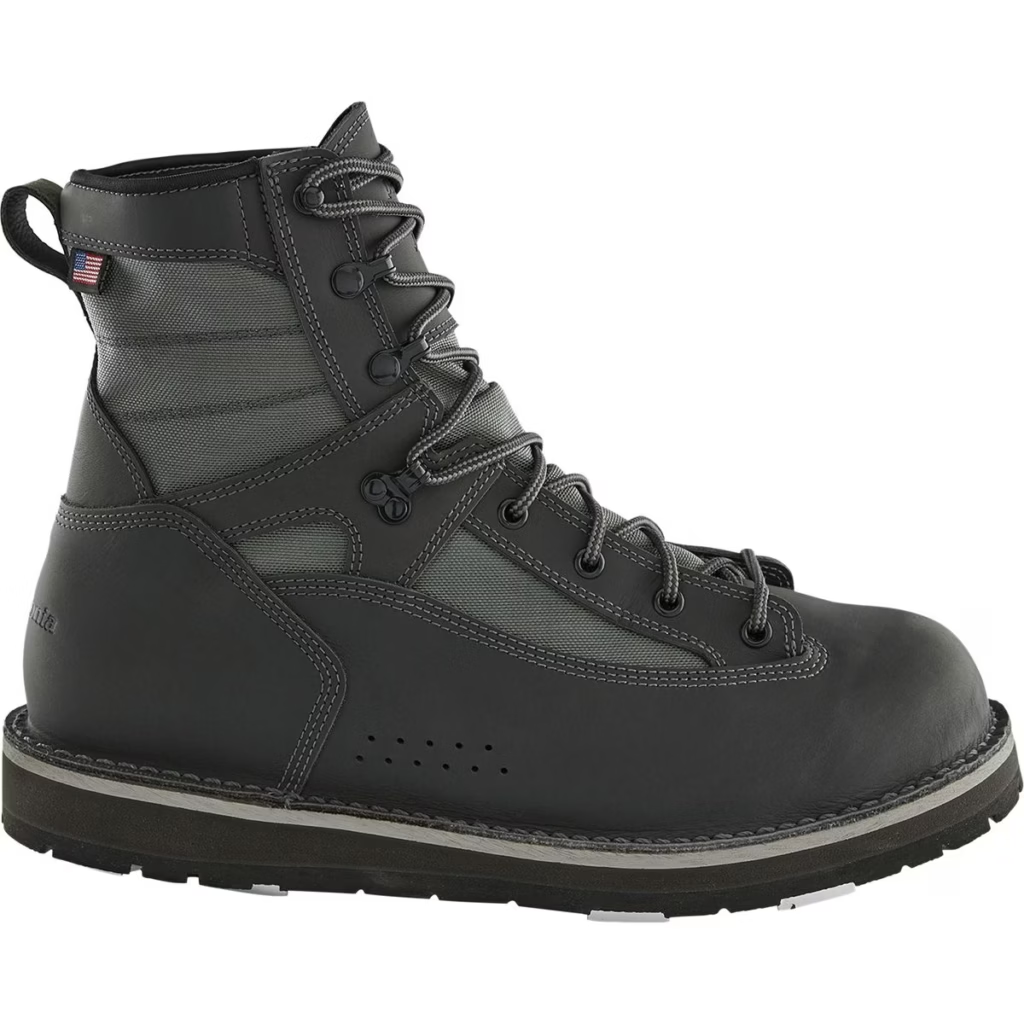
The Patagonia / Danner Foot Tractor

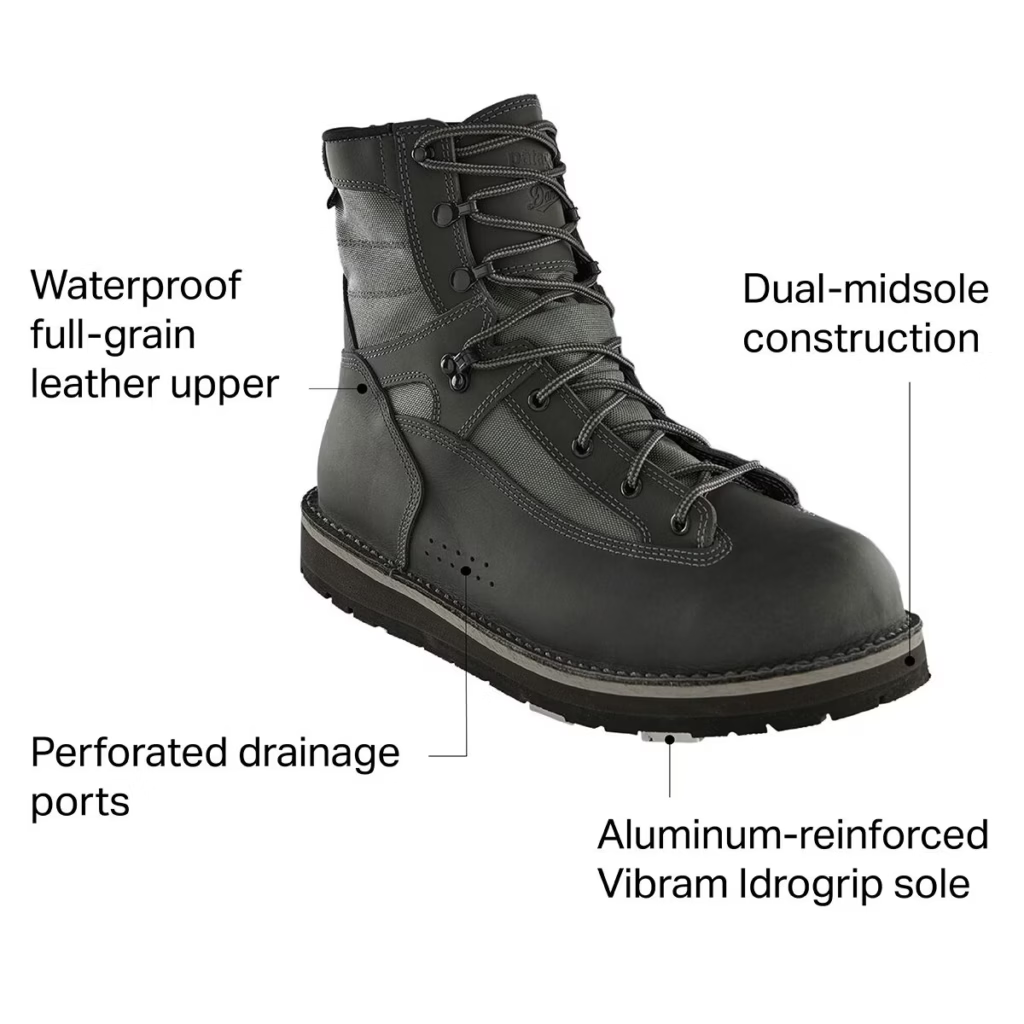
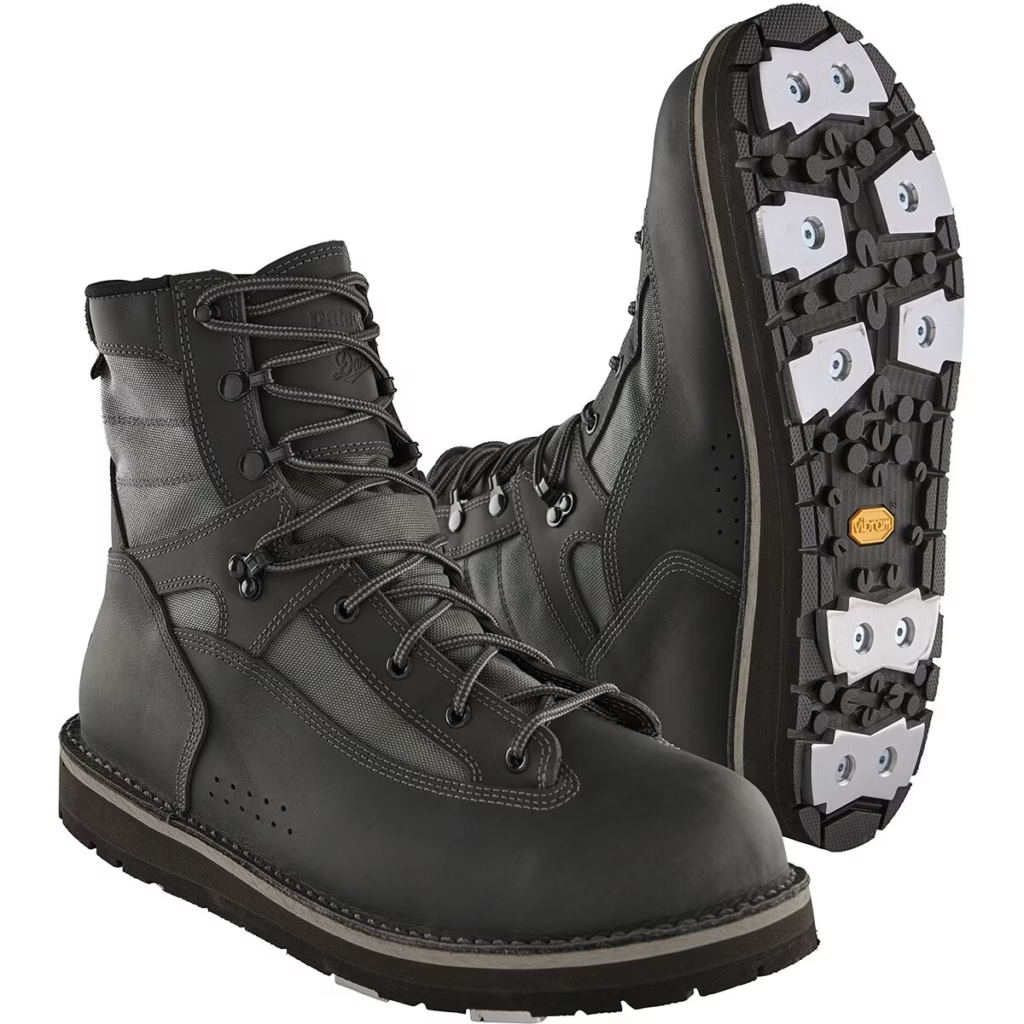
Launched in 2019, this was to be Patagonia’s first-ever brand collaboration with Portland, Oregon-based Danner, producing two wading boots built in the USA: the Foot Tractor designed with a heavy-duty aluminum bar sole for big rocky rivers, and the much lighter River Salt, designed for saltwater flats. Both featured stitch-down construction, full-grain leather, a number of small holes to drain water from inside, a variable lacing system with traditional eyelets on the forefoot and an additional quick lacing system in the ankle area, and best of all, they were resole-able — a rare, sustainability-focused feature in wading boots.

They are widely considered among the best wading boots ever made for durability and repairability. Fly fishing forums note these boots were still holding up after 5–6 seasons of hard use for owners who bought them. They were not cheap, however, fetching a price of $450 to $500.

Apparently, the price was too much for most anglers and Patagonia quietly moved on from the Danner partnership and launched a new collaboration in 2023 — the Forra wading boot, built with Italian bootmaker Fitwell. The Forra is lighter, more hike-oriented, and runs $299, signaling Patagonia shifted focus toward a more versatile, less expensive lighter-weight boot.

So, in my own nonsensical way to honor the cobbler, I researched whether any of these Danner boots were still available. To my surprise and delight, I found some at Backcountry.com. There were a few “foot tractors” in my size discounted 30% from the original price of $499. Most would still cringe at the discounted price, but I thought, what the heck for a boot that could last me the rest of my wading days on this good earth.

And so, with the ease of a click that is our modern-day buying experience, I purchased a pair with a nod to the Main Street cobbler. They’ll arrive soon enough and ooze the aroma of genuine leather and fresh Vibram rubber. I think a baptism in the Salmon River this fall is fitting, hopefully the first of many, many more to come…

Fish Hound

“If I fished only to capture fish, my fishing trips would have ended long ago.

Zane Grey

He sat upright in the back of the pick-up truck, like a tall, dome-headed, and very dignified old man. Adam, owner of FishHound Expeditions, opened the back door of his truck and there he was, “Hatch”, a blue-tick coonhound of massive scale and the namesake for Adam’s growing guiding business. I let Hatch sniff my open hand, then pet him. He lightly pawed at me when I stopped. He had those droopy eyes, lazy ears, and goofy charm only a hound-lover could appreciate. I was smitten…

IMG_7628
“Rado”, left, along with the original FishHound, “Hatch”… (picture courtesy of FishHound Expeditions)

Hatch would not be accommodating my wife and I on our fly fishing float, unfortunately, but there was another “guide dog” in the offing. Adam asked if I was OK fishing with “Little Bear”. After meeting the Malamute/Australian Shepherd mix, I was all aboard.

IMG_2245
Little Bear checks out one of many rainbow trout netted by Jay, our guide.

Before launching our raft, our guide, Jay, told me he needed to take his truck and trailer down to the takeout. My wife followed him in our rental car and Adam drove his truck, already occupied by FishHound Expedition’s two official canines, the honorable Hatch and his sidekick, Rado. Before leaving, Jay set me up with a nymphing rig to fish the beautiful riffle and run at the access while he was gone. One of the many nice offerings FishHound Expeditions provides to customers is tackle and waders. In this case I fished a Redington 9 foot 6 weight rod with WF floating line. The rig was a classic indicator set-up. On the business end Jay had an Alaskan favorite – the bead. I fished the indicator rig at the head of the run and worked it from the top to the tail-out. After just a few casts, I landed a 14″ rainbow that spent more time airborne than in the water. A little later I hooked a 18’ish+ rainbow – another acrobat – but this one threw the hook after a few fantastic sky-borne jumps. Then just in time for the return of Jay, Adam, and my wife to the access, I was into my third rainbow.

20180906_101805
Early success! This third rainbow really made my day and we hadn’t even started the float!

Jay netted my fish and Adam high-five’d me. Shortly after, as we readied the raft for our float, Jay commented that he could see I didn’t need “Fly Fishing 101”, a before-float class he gives to newbie and beginning anglers. It’s always nice to get a compliment from a guide!

Willow Creek is full of wild rainbows. These fish feast on an abundance of salmon eggs in late summer along with the flesh of dead spawned-out salmon. As we began the float, Jay explained that despite the presence of October caddis, midges, and a few mayflies, the rainbows key in on both salmon eggs and salmon flesh as these food sources provide “more bang for the buck” in terms of nutritional value.

IMG_2252
Jay at the oars with Little Bear, ever-present at my side, on lookout…

We launched onto Willow Creek with me in the bow, Jay at the oars, and my wife in the stern seat. My wife was not fishing, but it was a first for me to; 1) have her on a float trip, and 2) have her floating IN waders!

IMG_2243
My wife in waders, and not any low-budget waders, but top-of-the-line Patagonia…

From the access we drifted the clear, cold waters of Willow Creek, a tributary to the Susitna River. We were fishing the lower half of the river. FishHound Expeditions guides the upper and lower Willow, and considers this gem of a tributary to be their home water, and for good reason. The Willow turns out to be one of the most popular fisheries in South Central Alaska, although on the day we fished it, with the salmon run essentially over, it was as if we had the Willow all to ourselves. Located about 60 miles north of Anchorage on the Parks Highway, Willow Creek offers excellent fishing for four of the major salmon species: kings, silvers, chums and pinks. In addition to big rainbows (up to 30 inches), the Willow also holds Dolly Varden, Arctic Grayling, and even small numbers of burbot and whitefish.

Willow Creek gets a strong run of salmon each year because of the excellent spawning habitat it holds. The creek’s bottom is a majority composition of pebbles, cobble, and small rocks. And it is full of snags, the result of downfalls of the white spruce that dominate the land. The creek is named for the presence of of the ubiquitous Alaska willow – not the willow of the Eastern US that Southern Tier fly fishers may be so familiar with – but a shrub-like willow that is the preferred forage for the abundant moose. Indeed, during a bio-break to the bush I saw numerous moose tracks and dung.

Since we were nymphing with an indicator, the key to “bead” success was a true dead-drift presentation. Fishing from a drift boat – in this case a spacious raft – made a dead drift that much easier, but I had no problem hooking up when we stopped and waded a bit as well.

IMG_2255
Willow’s wild rainbows are beautiful, strong, and egg-crazy…

The snags made fishing a little more challenging. The Willow is definitely a “woody” creek and anglers would be advised to have a lot of flies, shot, and rigging materials on hand to do well here. As much as I tried to pull my rig out of potential snags, I still lost flies with some regularity. The saying goes, if you’re not hanging up, you’re not fishing effectively, but I started feeling bad with the number of times Jay had to re-rig me. Nonetheless, Jay always had an alternate rod rigged for the inevitable quick change-out. That alternate rod was rigged the same way but instead of a bead, had a flesh fly on the business end.

As with the bead, I’d never fished a flesh fly. Jay instructed me to fish it dead drift like the bead, but to give it some time to tail out before picking up and casting again. There were dead salmon hung up here and there in the snags, and Jay was able to demonstrate, “in the flesh” (pun intended) what the real thing looks like in the water by nudging a dead salmon. Sure enough, a chunk the size of my fly came loose with Jay’s prod of the oar and it drifted seductively downstream. The flesh fly I was using was tied by Jay, and looked just like the real thing in the water. My first “flesh” drift proved just so as I hooked up with another nice rainbow.

flesh_fly_tan_large
A flesh fly similar to the one Jay tied and had me use.

Partway through our float Jay decided to change things up. At four different times, smaller rainbows rose to the pink indicator I was using. They were beautiful with their plentiful spots, emerging from the clear green of the creek, pausing a millisecond to study the indicator and then trying to take it with a swirl. I laughed at their vigor and Jay added, “can you imagine what they’re thinking?” “That’s gotta be the biggest salmon egg I’ve ever seen…” But that display gave Jay an idea. He tied on a slightly larger bead with a stronger pink color to it. After our shore lunch he showed me a real salmon egg he had found among the pebbles of the creek’s bottom. The bead egg was pretty close to the size and color (very pale white/orange) of the actual egg, but he wanted to see if the size and color change might further improve our results. First cast with the new bead and I was immediately into a rainbow, followed by many more. We continued to use that new color bead along with the flesh fly.

IMG_2269
This rainbow had a faint lime color to its lower sides…

Midway through the float, Jay pulled us over to a long gravel bar. There he set up shore lunch – a small portable grill and cooler – reindeer brats, chips, apples, beer, water. We stood and talked as Jay cooked the brats. Little Bear laid on the gravel, very content. And the Willow washed by.

iPhone Pics 203
Guide-turned-chef, Jay, sets up a nice shore lunch…

After shore lunch, we continued our float down the Willow. The Willow often appeared as creek, stream, and river. Wide sweeping stretches with deep holes made me think more of the West Branch of the Delaware, mid-sized riffles – the Beaverkill, and then narrow choke points had a bit of lower Owego Creek flavor.

As we worked farther downstream, we began to see a few silver salmon in the deeper holes. At one nice run Jay pulled ashore and rigged an 8 weight rod with a streamer. He said it might be possible to rouse one of the silvers if they were holding in the deeper holes and backwaters.

We gave it a shot, casting the Dolly Llama, a favorite streamer for salmon in Alaska…

Dolly_Llama_Tandem_Gold_Cone_Pink_White_large
The Dolly Llama

With no one apparently home in the salmon hole, we continued our float, slipping easily down the Willow.

IMG_E2280
Jay deftly maneuvers our raft through a choke point and downfall…

I’ll never tire of indicator fishing. And on the Willow, it was all the more exciting, casting to its deep snaggy holes and imagining what egg-crazy rainbow might be laying in wait. This was new water, truly wild, and a frontier farther west than I’d ever fished.

We hauled out where the Willow met the Susitna River – a big brawling glacial river, slate-grey in color, braided like a pretzel across a wide river valley. Born of Denali, the Susitna flowed to Anchorage and emptied into the Pacific.

Before hauling out, Jay paused long enough to let me get a few more drifts in. I fished the seam where the Willow’s clear flows met the silty flows of the Susitna, and quickly caught three more rainbows – a wonderful send-off to a trip that went way too fast.

IMG_2284
Last cast…

For those who have never fished Alaska, my experience with FishHound Expeditions had me immediately planning a return trip. I cannot recommend them enough! There are a lot of choices of quality outfitters in Alaska, and on top of that, myriad fishing possibilities from fly fishing small creeks for grayling to fishing the big salmon runs. Locations are another choice with overwhelming possibilities, given the size of the state. But I would definitely consider a trip or trips with FishHound Expeditions, particularly if you are in the Anchorage area. In addition to floats of their homewater, FishHound offers trips to the back country via plane or helicopter. These trips expand opportunities in fly fishing to big fish days and luxury back-country glamping.

As I write this, I am at once missing the good country, great fishing, and the hardy people that make Alaska. This wonderful day on Willow Creek offered a fine taste of a place that beckons me back. One day I’ll return, and maybe, just maybe, spend an extended trip in the backcountry with fishhounds…

Fishing in the Golden Years – Part 2

“In the end, it’s not the years in your life that count. It’s the life in your years.”

Abraham Lincoln

The trip south from my first night’s stop in Columbus Ohio would entail a journey of over 500 miles through the cities of Cincinnati, Louisville, and Nashville, before a final overnight stop in Alabama. A deep front was sweeping eastward as I made my way south, bringing more heavy rains, high winds, thunder and lightning, and even tornado warning sirens south of Nashville. After my final overnight stop, I was up early, coffee and sausage egg McMuffin on the go, and on my way to Destin.

Destin welcomed me with warmth and sun, and after arriving at our place, I set about unloading, provisioning, setting up and settling in. Once that was done, I rigged up my 8-weight fly rod with a big wooly bugger on a floating line and scouted the Horseshoe Lake shoreline for largemouth bass.

Horseshoe Lake is one of several man-made freshwater ponds/lakes situated in the Sandestin resort in Miramar Beach, Florida. Horseshoe Lake is the biggest, the others like small golf course ponds but all home to abundant bluegill and largemouth bass, and both species can get quite large.

One can expect to catch largemouth, like this decent specimen, in the freshwater lakes and ponds of Sandestin.

Our place is just steps away from Horseshoe Lake – all the Beachwalk Villas border it, in some cases with a sloping bank, in others, like ours, with a bulkhead. In either case, one can sight fish to the largemouth as they prepare to spawn. Post-spawn is a different game as the spawn-weary females drop back into the depths and the smaller males guard the nest until the fry are about 2 weeks old. Then they too take refuge in the depths to recharge. The timing of this activity is dependent on water temperatures, which is dependent on the weather – colder springs delay it – warmer springs hasten it.

As is always the case, the vicissitudes of temperature and attendant gulf and bay water temperatures, wind, and rain, all make their mark, good or bad, on the fishing. Fortunately, as chronicled in this blog before, Destin offers diverse fishing options – freshwater lakes, saltwater bay and surf – so there are usually always options to keep one in the game.

From the start, the weather did not cooperate for fly fishing the surf. The winds prevailed from the south and east, making for a turbid and high surf and difficult sight fishing. For the first time since purchasing our property in 2016, I took my small fishing kayak along on this trip to better fish the bay. In all my previous outings, I waded the bay shore, which can still be effective but can be difficult depending on the bottom type. I had personally experienced a few cases where I sunk deep in marsh muck. The kayak removed that risk, while allowing me to explore a variety of bay habitat.

Neighbor Dale, a regular snowbird, would scoff at me and my fly rod. “Oh, forget that thing, get some bait, and fish the dock”, he’d say, claiming there were big redfish to be had. While I wasn’t going to go “bait-dunker”, I witnessed what he was talking about on the several occasions I ventured forth in my kayak. I saw no big redfish caught, but fishing within earshot of anglers on the dock indicated they were getting hook-ups only to be broken off when these big burly fish ran back under the dock.

On the bad surf days with winds prevailing from the south, I’d launch my kayak on the protected bay side at Baytowne Marina. There, from a sugary sandy beach adjacent to the marina, I’d paddle out to the waters off the marina and around the boat channel that leads out to the marine expanse known as Choctawhatchee Bay. The game here was all about fishing clousers and other weighted streamers on an intermediate line to spotted sea trout and redfish, as well as being ready for marauding jacks that could show up in an instant, brutish marauders busting bait.

I made three trips with my little kayak to the bay. I fished the edges of the channel off the marina the first time, picking up scores of “jacks” – juvenile spotted sea trout. Another kayak angler fished near me with spinning gear and did the same. I’ve always felt any time I can keep up with or even best the gear guys, I’m doing well. The fishing was great when you found these fish that tend to school when they are smaller, but they are also a moving target.

Bottlenose dolphins inhabit the gulf, the harbor, and Choctawhatchee Bay. They reach sizes of 6 to 13 feet and weigh between 300 and 650 pounds and consume as much as 4% to 6% of their body weight (12 to 40 lbs!) each day. And they love fish. On my first outing I spied a mother dolphin with her calf, hunting the water around Baytowne Marina. From a distance I had no issue with them, but when they got close, I suddenly felt intimidated by their size and power, especially considering I was in their element, at eye level, and in a 10′ kayak. In several cases I’d be fishing and catching, but as soon as they were around the fishing completely shut down, for obvious reasons.

My final trip in my kayak proved exceptional. On that fine day, I observed huge schools of baitfish close in to marina structure. I focused on casting clousers of different colors where I saw baitfish getting busted. I was using a full intermediate line on my 8 weight – I’d cast and allow the fly to sink, then strip back erratically, sometimes allowing the fly to pause on the retrieve. It wasn’t long before I was hooking up, and these were good sized spotted sea trout…

A spotted sea trout on the fly…

Spotted seatrout, also known as speckled trout or just “trout” in southern waters, are a great gamefish and good table fare. Their northern cousin is known as the weakfish. Though they have the name trout assigned to their order, they are actually a member of the drum family. They are typically found in bays and estuaries where they hunt crustaceans and baitfish.

While I did not hook any redfish, in two cases I saw two giant bull reds slowly pass just beneath my kayak. They, like the dolphins, made me feel downright diminutive in my little kayak, the Cape Breton fisherman’s prayer coming to mind – “Lord protect me – the sea is so large and my boat is so small…”

My brother-in-law, Jeff, was able to visit for a few days. He arrived one morning after having visited his daughter at college in Tampa. It wasn’t long after getting him settled that we were out the back door like young kids to fish for largemouth. Jeff is originally from Pennsylvania – Claysburg to be exact – and cut his fly-fishing teeth on the creeks and streams of the southcentral PA mountains. After high school, Jeff headed West to Southern California where his brother lived and worked. The rest of his formative fly-fishing years were spent plying the mountain streams of the Sierra with far-flung guided trips to Alaska and other fabled rivers like the Green, the Yellowstone, and the Bighorn. Bass are not in his blood.

As it was for me the first time I fished the lake, he was amazed at the size of some of the bass as they staged for spawning. The females were often twice the size of the males, the males doing all the work and waiting for the females to move up to them. They built nests close to shore, but favored sites near cover, such as tight to a bulkhead, around the pilings of the bridges, and under trees. In the early stages of the spawn, the males would aggressively chase streamers fished around the nest. Once on the nest, the males and females would continue to bite, but as the spawn progressed, the bite would slow. Even so, the stage of the spawn could be different across the lake, so it seemed there were always some willing players. As the spawn wound down with increasing water temps, the females left the child-rearing to the males and after roughly 2 weeks, both parents were gone, sulking in the depths to recharge, while their black needle-like fry held in loose schools around the nest, and then dispersed.

I fished one small pond adjacent to a golf course with Jeff. We cast big buggers to the deeper water as we saw no fish on beds. It was an intermittent bite, but we did hook up with some more nice bass. I believe these were post-spawn fish and back in an active feeding mode. It’s likely the smaller pond’s water temp was higher than Horseshoe Lake, and the spawn is all about water temperature.

A beautifully marked bugger bass… Golf cart fly fishing is fun!

Jeff and I also booked a guide for redfish by the name of Cleve Evans with Shallow Water Expeditions. Cleve met us a daybreak at a boat launch off St Andrew Bay in Panama City. It was a cool morning, and Jeff and I were a little underdressed for the high-speed cruise on Cleve’s flats boat. I shivered uncontrollably but suffered through it. The day would warm with the bright sun soon enough.

Cleve gave us excellent instruction on casting from the platform on the bow – Jeff and I would alternate all day long. Cleve would coach us in a low-key way, calling out fish we he poled us along expansive marsh and flats.

Guide Cleve Evans with a big redfish.

We started the morning with a promising sight – a big redfish was tailing right along a marsh bank, his back partially out of the water. Here and there baitfish would scatter as he worked his way along, seemingly ambivalent to our presence. Jeff was on point and the guide told him to cast. Jeff is an excellent caster, perhaps too excellent in this case as he bonked the big redfish on the head, sending him off to deeper water like a jetboat on nitrous oxide. Unfortunately, despite Cleve’s best efforts, this scene would repeat itself all day. We saw plenty of fish – I’d estimate up to 50 – and we had many shots, but the fish were extremely skittish and usually scooted with any cast that landed even remotely close to them. Cleve fished us hard and towards the end of the day Jeff and I had already resigned ourselves to a redfish beatdown. We were tired and bug-bitten by some type of tiny biting fly that was particularly fond of Jeff’s exposed ankles. Cleve expressed his own frustration with the day – “we had eight yesterday” – but he added that redfish on the panhandle can be that way.

Jeff departed the following day, and I enjoyed a few more days of fishing the lakes for bass…

and beautiful Choctawhatchee Bay for trout.

Soon enough it was my time to leave too. I took the same route home and arrived in the still cooler weather of Lake Ontario. Memories of warmth, white sandy beaches, dark green and gleaming silver fish now faded. But rather than being despondent leaving the great fishing of Destin, I had cause for happy days ahead – the smallmouth pre-spawn bite loomed in the offing.

Fishing in the Golden Years – Part 1

You do not cease to fish because you get old, you get old because you cease to fish.

Anonymous

It would be a first trip to our little place in Destin where time didn’t really matter anymore. I was free of the corporate chains, retired, and living the “every day is a Saturday” life.

I sketched out my itinerary, travelling from our home on Lake Ontario, which, to my delight, meant a different route than when driving from Vestal. It would be one with some new fish-as-you-go possibilities. Tracing the fastest route on google maps, I found my path took me along “steelhead alley”, an area I had heard much about but never fished. These 400 miles of southern Lake Erie shoreline span three states–Buffalo, New York at its eastern end; Toledo, Ohio, on its western flank; and Pennsylvania’s shoreline in the middle.

After some internet searching, I found Captain Kurt Charters and contacted Captain Kurt himself, arranging for a guide as well as an overnight stay in one of his cabins. I’d be fishing with guide Dale Fogg on Elk Creek. Elk Creek is a 30-mile-long stream in the northwestern corner of Pennsylvania. This tributary, the largest of the streams in “Steelhead Alley”, is best known for its steelhead fishing. Each fall there is a run of fish from Lake Erie that draws anglers from all around, including Canada.

Guide Dale Fogg. Pic courtesy of Captain Kurt’s Charters.

I arrived in late afternoon at Crooked Creek Cottage, a quaint old cabin perched above, you guessed it, Crooked Creek.

Crooked Creek Lodge – all to myself. Pic courtesy of Captain Kurt’s Charters.

The place had authentic old-school fly-fishing charm, with a beautiful stone fireplace, comfy furnishings, and rooms adorned with fish and game.

After dinner out, and a few cold brews, I turned in, looking forward to one more day on northern waters, before plying the warm waters of the gulf.

I met Dale, waders on, at an access adjacent to Elk Creek. He was rigged up and ready to go and after a brief introduction we were ambling down a trail to the creek. Some of the area streams were running high at the time, but the Elk ran clear and at easy wading levels. The Elk runs over bedrock and gravel and features pools, deep runs along cuts in the bedrock, and riffles – very pretty water for sure.

Dale set me up with a 10-foot 7 weight rod and WF floating line, fishing a 2-fly indicator rig – an egg pattern on point with a white streamer as the tail fly. Lake Erie steelhead love eggs but also the emerald shiners that inhabit the creek.

An emerald shiner.

One of the great things about fishing with a guide is the little fly fishing “hacks” you can pick up from their experience on the water. One such hack I learned is to wet and then step on a streamer to get the air out, allowing it to sink faster.

Pennsylvania stocks Elk Creek and other PA tribs with steelhead smolts in the Spring. Dale expressed disappointment that they had been stocked earlier than normal because smallmouth bass run up the tribs in late Spring to spawn and are putting on the feedbag in anticipation of the energy needed for spawning. He feared a year class could be decimated. The steelhead smolts were certainly there – we picked them up frequently on the egg pattern to the point where they were borderline pests.

We started fishing upstream, working the dark cuts in the bedrock. It never ceases to amaze me how easily trib fish can hide in crystal clear and relatively shallow water. The uninitiated would look at these places and declare them fishless.

We moved up to a beautiful long run of some depth, and it was there that I shook the skunk, though I lost that first steelhead after a brief struggle. This would be a recurring theme throughout the day and one common to steelhead fishing. The hookups were often subtle – the slow dunk or even hesitation of the indicator – but each hookset surely set off headshakes that rose to the surface with violent thrashing.

This steelhead hen was likely post-spawn. Note the beat-up fins.

We worked up to a deep creek bend of complex currents and fished that without success. Above us was another gorgeous run but it was taken by a guide and two anglers, so we waded downstream and fished along the way, thoroughly working the seams and pockets.

We arrived at a very nice riffle and run, and it was there that the bite improved significantly, including a huge redhorse sucker that Dale estimated at 15 lbs!

An example of a redhorse sucker. These fish are dogged fighters and can get quite large. Pic courtesy of 365angler.com.

The egg flies were the big producers – I don’t recall picking up any fish on the streamer, although Dale said streamers can work very well at times.

This beautiful piece of water held many steelhead.

We waded down to another deep pool under a train trestle with a deep drop-off and more complex current and I hung a very good steelhead there but lost it. Given the current, the depths, and the limited safe wading adjacent to the pool, I doubt I’d ever have landed that fish anyhow.

Here I’m fishing the “trestle pool” where I lost a very nice steelhead.

All in all, it was a great day, with 3 beautiful steelhead landed and another 7 lost in the fight.

If you fish any Lake Erie trib, you’ll likely pick up quillbacks in the mix.

Redhorse and quillback suckers were also in the mix.

Dime bright and full of fight!

As predicted in the forecast, the skies deepened with overcast, the winds picked up, and the rain came, first in sprinkles, then in cloudbursts along with rumblings of thunder in the distance. Dale was nice enough to push the fishing as much as he dared, but even I started getting a little apprehensive as the thunder and lightning neared and intensified. Dale suggested we head in and I wasn’t objecting.

It was hard to leave fish like this one even with thunder cracking the air, flashes of lightning, and dousing rain…

We hiked back to the access, the only vehicles left, shrugged off our waders, squared up with tip, and went our separate ways in what now amounted to a downpour. I was soon heading southwest on Interstate 90, driving straight into even nastier weather. It took a while to dry out, but I didn’t care. I was tired and happy, and looking forward to my first stop, a cold beer, a steak dinner, a warm bed, and a replay of the day’s great fishing, with steelhead jumping in my dreams.

Winter Storm

For everything there is a season, and a time for every purpose under heaven.

Ecclesiastes 3:1

My phone buzzed with an incoming text while I built a fire in my fireplace. It was my cousin’s husband, John.

“Did u get much snow?” John texted, in his characteristically straightforward prose.

I responded with a picture out our back french doors.

We parried back and forth a bit, John taunting me with the 50 degree weather he was having in North Carolina and his plans to fish. “Should have some luck with the bass.” he texted.

I replied simply with “bastard!” and added another log to the now growing fire. Then I poured a glass of Langevulin and settled down to the business of rod wrapping snake guides on an 8-weight fly rod I was building.

Outside my little study, the wind howled and the white stuff was flying nearly horizontal. The temperature had been falling by the hour since morning. Snow piled high on the ground and blew in tall drifts. And the more I thought about the winter weather, the more thankful I was for being trapped by it all.

These days it seems that almost no matter where one lives, there’s an open fishing season to be had. On the one hand, it is nice to be able to get out and shake off the rod rust. The abundance of flexible fishing also provides ample opportunity to fish for species that were once closed to a strict calendar date. Trout, back in the day, were off limits from October through March, the opener dependent on the state. Bass season was also closed through winter. But for me anyhow, the true depths of winter provide a fishing respite in a way – a time to step back, work on gear, re-stock flies, build fly rods, make plans, do maintenance and repair, inventory tackle, and set goals for the year ahead. It’s time to do work the work of Stephen Covey’s 7th Habit – “Sharpen the Saw”.

Covey’s 7th Habit is all about the critical importance of self-renewal. The analogy is the saw – one can use a saw until it dulls. Further sawing just increases the workload and the wear until the sawyer is exhausted, the work utterly inefficient and now ineffective. By my way of thinking, time off from fly fishing is a necessary thing, just as rest is important to effectiveness during our hours awake.

Beyond that, there’s something to be said about absence making the heart grow fonder. When I was a boy, I would look forward to Opening Day through what seemed like an endless winter. The anticipation of that magical day just sweetened the experience all the more. It made one savor every aspect of it – waking early to the smell of hot coffee, and eggs and bacon – the chill of the air, the crunch of the remaining snowpack, the taste of the lunch packed, the anticipation as I drifted a worm through the dark waters of a pool, and the tug, that blissful tug of a trout.

As is said, to everything there is a season. Perhaps we should get back to spending more time on sharpening our fly-fishing saw and storing up that wonder and anticipation of another day astream…

The Cobbler

“Remember, cobbler, to keep to your leather.”

Michel de Montaigne, French philosopher, on staying true to one’s craft.


By all accounts, it had been a great year of fishing. My logbook listed just shy of 50 trips the previous year, excluding many half hour jaunts on my backyard pond to unwind after work. So, during my early spring gear tune-up and overhaul, it didn’t surprise me that my boots were in pretty sad shape.

I contemplated, dare I say, putting them out to pasture. After all, I’d owned them since I started fly fishing some 10 years earlier. I bought them mainly for bass fishing in the rivers – a relatively inexpensive but classic design – and Hodgeman’s no less – still made in America back then. They’d served their master well, and the mantra of this throw-away society hummed away in my head as I looked them over. Those glossy catalogs of the big brand fly fishing purveyors sell a compelling story – faster, lighter, better, tougher…

Oh, the places they took me…

The fly rod may be the heart and soul of a fly fisherman, but its his boots – the workhorse – that get him where he needs to be. They take the most abuse – the lion’s share of wear and tear of all a fly fisher carries. They are rarely in the picture of the beaming fisherman holding up the bounty of the day’s trip. And at the end of the day the weary fisherman unceremoniously sheds them, and stows them out of the light, beneath his waders, the Rodney Dangerfield’s of the angler’s gear – not getting a whole lot of respect. But like the weathered hands of a farmer, a well-used pair of boots has a story. To anyone who sees them, they speak experience astream. And they get better with age – fit better and somehow feel better. So, for these reasons, and the outright economic prudishness these times demand, I reconsidered the death sentence I was about to hand down…

There’s an old shoe repair store on the mostly bypassed main street of my town. The stores that surround it are largely what you’d call mom and pop businesses. Some storefronts are shuttered looking for new owners, the victims of the big box retailers that now line the parkway to the east. This little place sits among them – a classic sign marking its existence. It is busier than one may think.

You won’t find Gucci here, but he could repair them…

So, I went there one day on lunch break, boots in one hand, new Hodgeman’s felts in the other. Inside, the place breathed leather, shoe polish, and glue. Behind the counter was a doorway, a window into the lonely world of the cobbler. In the back of the shop was a long workbench, shoe anvils, all types of tools – awls, picks, and mallets – and racks of laces, shoemakers stitching, and leather. To the left of the counter were the fruits of true craftsmanship – neatly set in racks, tags hanging with names of owners. Every shoe, boot, belt, and handbag was polished. I began to feel good.

Inside that door waits a true cobbler…

The cobbler soon emerged from the back, clad in a heavy leather apron, workshirt, and brimmed hat. His whole appearance, including the neatly trimmed beard covering his jaw, seemed Amish, though I couldn’t be sure, and his hands testified to his work ethic – rough, calloused, and black with polish. His demeanor was pleasant. He studied my boots, turning them in his big hands – pulling the tongue back, examining the sides.

That my boots needed to be re-soled was apparent. The felt was worn thin and, in some places, de-laminated from the boot bottoms. But it’s what I didn’t tell him that he seemed to focus on. “I can re-glue the inside sole”, he said. He continued examining my boots, noting how the stitching on the outer sides was frayed and, in some cases, parted. “I’ll re-stitch these here”, he added. We settled the particulars – I could pick them up in a week. He marked a tag with my name and phone number and set them in a rack of accumulating work. He asked where I fished. The Susquehanna he was not too familiar with – he had canoed a few local lakes, but not the rivers of the Southern Tier. So, for the next half hour I told him about the fishing – the big smallmouth bass, walleyes, channel cats, carp, and musky that could be caught, and then about the wildlife that could be seen – mergansers that flew like sea-skimming missiles up the river and the osprey that dove straight into the river like a rock dropped from the clouds and the eagles that cast big shadows where they flew, and the great blue herons that at a distance in the early morning mist looked like hunched old fisherman working a pool. All these things I had seen because of my boots.

A week later I returned – a sunny spring day full of promise. I picked up my boots, newly clad with bright white felts, neater in appearance, restitched, all put together, and ready for work. The fee was so nominal I can’t recall it now, but for the memories they’d bring me, I should have paid a hell of a lot more.

« Older posts