One angler's journey, fly fishing through life

Category: Fly Fishing Clothing

Posts related to anything worn during fly fishing.

Fly fishing for albies with Fishhead Greg…

Can you fish tomorrow morning?  It’s lights out albie fishing on the fly. 

text from Greg Cudnik, “Fishhead Greg”

The text was simple and to the point: did I want to go fly fishing for bait-busting Albies? Is a frog’s ass watertight? Does a bear shit in the woods?

I had received Greg (aka “Fishhead Greg”) Cudnik’s text just before I left for the Jersey shore to see my parents. Greg owns Fisherman’s Headquarters on Long Beach Island (Ship Bottom, NJ), a well-known bait and tackle store and that year he got his Captain’s license, allowing him to take anglers on fishing charters.

Looking for a chance to capitalize on the fantastic fall fishing of the New Jersey shore, I checked in with him about a possible fly fishing charter. My first inquiry found him up in Montauk, chasing the legendary striper/bluefish/albie blitz. He said he would get back to me, but after hearing that, I figured he might be out of action for a while. Greg is, after all, a fishing addict as his fishing moniker attests. So I packed my salty fly gear nonetheless, figuring I could shore fish Barnegat Bay, the inlet, or the surf during my visit to my parents. And as it would turn out, that was a very good thing, for on the way down, shore-bound, I got his text – “lights out fly fishing for albies” – and it was game on. I was anxious to fish for a species I’d long ago heard was tailor-made for saltwater long rodders…

false_albacore
Call him what you want – little tunny, fat albert, albie, or more properly, false albacore – he’s fast, powerful, and will give your backing a good airing in seconds…

The false albacore goes by many names—little tunny, fat albert, albie—but whatever it may be called, this species is prized for its blistering runs and never-give-up fight. One of the smallest members of the Scombridae family, the false albacore is not a “true” tuna (genus Thunnus) but is more closely related to the mackerels. The species’ streamlined body, powerful tail, and pelagic lifestyle make it pound-for-pound one very powerful game fish, especially to light tackle enthusiasts like fly anglers. Classified as a pelagic, false albacore prefer relatively warm water and spend much of their lives in inshore waters, making them very accessible to anglers, especially in autumn. They can be found wherever baitfish congregate—in inlets, around jetties, and sandbars. Like other fish that feed in schools, false albacore will drive bait to the surface or into shore in order to concentrate the food. Albies lack a swim bladder so they must be in constant motion, which explains their phenomenal swimming speed and power.

img_7573
Captain Greg Cudnik with a “fat albert” on the fly (pic courtesy of Greg Cudnik).

I met Greg at the marina before 6 am. It was still dark and the stars dotted the ink-black morning sky like so many glittering diamonds. I dressed in my foul weather gear and broke my rods and tackle out while Greg readied his 21 foot Parker center console for action. His boat proved to be a great sport fishing machine with an especially large and unobstructed bow that was perfect for fly casting.

Greg brought the 150 Yamaha to life and we slid out of the marina and cruised slowly towards Barnegat Inlet. In the darkness, I rigged my rods – a 9 foot 8 weight with an intermediate sinking tip and a 9 foot 9 weight with full intermediate line. The game plan was to fish the north jetty of the inlet while we waited for signs of bird play outside the inlet.

050313-A-EO314-103
An aerial view of Barnegat Inlet. The small town of Barnegat Light is to the bottom left in the picture above – the North Jetty is to the top right – with the bay entrance to the left and the ocean to the right.

Barnegat Inlet connects Barnegat Bay with the Atlantic Ocean. It separates Island Beach State Park and the Barnegat Peninsula from Long Beach Island. Watching over the inlet at the northern end of Long Beach Island is “Old Barney” the historic Barnegat Lighthouse.

albie5
Old Barney, standing watch over Barnegat Inlet (pic courtesy of Greg Cudnik).

The inlet gets its name from Dutch settlers who in 1614 named it “Barendegat,” or “Inlet of the Breakers”. The inlet can be extremely dangerous when ebbing or flooding tides run counter to high winds, building the heavy seas the Dutch must have observed before naming it.

Once we got out into the inlet, Greg nosed his boat within 30 feet of the end of the visible part of the north jetty. The rest of the jetty leading out to open ocean is submerged rock. The constant swirling and crashing of the sea over this section of the jetty creates a cauldron of froth that is known to attract stripers and blues all year. I fly fished at first, casting a streamer into the froth, allowing it to sink, then stripping it back, but no one seemed to be home. Greg had me switch up to a light saltwater spinning outfit using first an imitation eel and then a white bucktail with a hot orange plastic tail. After a number of casts I hooked up and landed a nice “cocktail” blue. Not long after, I felt a good bump and retrieved my bucktail with most of the tail bitten clean off. For the unknowing, bluefish and plastics don’t mix too well but as Greg added, at least we’d gotten rid of the skunk.

As the eastern sky began to glow orange, bird play started outside the inlet. At first, the numbers of birds were small and their concentrations, weak. Greg said the seabirds, including brown pelicans, were searching for bait. He continuously spied the horizon for denser groups of birds and sure enough, as the sun broke the horizon and the sky lightened with the new-found dawn, birds wheeled in bigger and tighter groups. Then they began diving, a sign that it was time to move in – but not recklessly. According to Greg, many anglers are apt to drive their boats right into birds and fish, not realizing how that can put the blitz down. We parked a bit outside the developing fray and Greg had me blind cast the area. The fishfinder was lit up with tons of bait.

I threw a “deadly dick” metal for a while – then Greg had me switch up to a white plastic. He had me experiment with retrieves, “burning it” at times, letting it pause, and even jigging it as I retrieved. I worked the water column as best I could and on one retrieve saw what looked like a boil not far off the stern. I continued my retrieve only to have an albie flash at it right at the boat, then take it solidly and dive. The drag on the spinning reel screamed and I was on. I was at once amazed at the sheer power and speed of these saltwater bullets. I’d gain a little on the fish only to have it take off on blistering run after run. Eventually, we had the fish boat-side, and Greg deftly tailed it…

albie1
My first albie… (pic courtesy of Greg Cudnik)

This first albie was followed not long after with another on the same soft plastic lure.

albie3
Another nice albie on the spinning rod. About this time of the morning the fish began to feed on the surface (pic courtesy of Greg Cudnik).

By this time the sun was up and the surface action began to improve. The albacore were driving bait up from the depths and slashing through the confused schools from all directions. Birds wheeled just feet above, hovered, and dove. With two albies tallied, Greg said it was time to break out my fly rod…

Greg had me tie on a unique fly that has been garnering a lot of attention in the northeast saltwater fly fishing world. The fly is the innovative design of local fly rodder and fly designer, Bob Popovichs. Greg felt the fly was a perfect imitation of the “white bait” the ablies were chasing.

22549960_1788431681465000_4698076119308831124_n
The “Fleye Foil” fly Greg had me use was a perfect match for “white bait” in the water. This fly looked great in the water, cast well, and never fouled (pic courtesy of Greg Cudnik).

I tied this fly to 15 lb tippet off a 6 foot leader on my full intermediate 9 weight line. As the sun came up and the fishing exploded on the abundant bait, the wind began to blow and the sea took on a bit of a chop, but Greg did a terrific job positioning me for optimum casting, given the stiff breeze.

I experimented with retrieves and found that sometimes allowing the fly to sink a bit worked better than stripping fast through the blitz. This was harder than one might imagine. With fish blasting through the water, it was very tempting to strip fast. My first albie ate the fly with just one strip after the drop. The take was solid and fast, and it was all I could do to clear the line and get the fish on the reel.

albie4
The first of 3 ablies on the fly. I lost two more as well. The false albacore just might be the ultimate gamefish for the saltwater fly fisher (pic courtesy of Greg Cudnik).

Two more albies followed and I also lost another two fish after brief hook-ups.

As late-morning approached, the blitz seemed to settle down. Fish would pop up here and there. When they did show up they were not around long. Boat traffic may have contributed to the slow-down. Indeed, we observed a lot of fishermen driving right into some blitzes. Most anglers were spin fishing – a much less taxing way of reaching pods of fish. Greg noted many of them were throwing metals far larger than the baitfish the albies were feeding on and the lack of hook-ups for these anglers backed his theory.

Research I’ve done on angling for false albacore indicates that fly fishing is often the “high hook” method of fishing for them. Albies, like most members of the tuna and mackerel family, have excellent eyesight. When they are focused on eating one food item, anything that isn’t the same size, color and profile will be totally ignored and only a near-perfect match will score a strike. This favors fly-fishermen, who can match the color and diminutive size of almost any baitfish.

While we fished, Greg did his best to avoid the “run and gun” game. He’s fished enough days when sitting and letting the fish come to him was far more effective than chasing. The key seemed to be positioning the boat in an area of action and then waiting for the schools to pass by.

Anyone interested in this form of fly fishing should gear up with an 8 to 10 weight saltwater fly rod. I found my 9-weight to be perfect. The action of the rod should be medium-fast at minimum with fast being a better choice. While the fall can be warm and the sea almost calm at times, the opposite can be true as well, and this fishing is truly open water fishing. So, a stiffer action helps combat windy conditions. Also keep in mind that while casting at long distances is not always the case, you will cast a lot.

A saltwater-rated fly reel with a good disc drag is also needed as these fish will quickly peel line off well into the backing. Multiple reels spooled with floating, intermediate, intermediate sink tip, and sink tip fly lines will address a variety of fishing conditions. If I had to go with just one line, I’d go with a full intermediate line, preferably clear, as these lines will get the fly down beneath potentially choppy seas. You’ll also want a selection of tapered fluorocarbon leaders rated from 20 lbs down to 12 lbs. Tippet should range from 20 lbs down to 10 lbs. As previously mentioned, albies have excellent eyesight. They can be finicky. Bite guards are not necessary with albacore, however, bluefish can be mixed in with these fish at times, so you might want to have at least some heavier mono available (30 to 50 lbs) just in case.

Fly choice should match the hatch but a good selection of clousers, deceivers, and the foil flies mentioned earlier will typically do the trick. Colors should also match the prevailing bait but silver, white, pink, light tan and light olive will work well in most situations.

alba-clouser
The Alba-Clouser is an excellent example of a clouser tied specifically for false albacore. This pattern uses synthetic fibers for toughness and flash. Note the light pink and white blend and the sparse use of material. (pic courtesy of   saltwatersportsman.com).

While fishing from surf and jetty is one way of getting into albies, this fishing is best done from a small boat. Hiring a licensed captain is a great way to get the access to these incredible fish. If fishing from a small open boat, dress for the weather. A good set of fishing bibs, a foul weather jacket, and boots will help shield you from the effects of wind and water. Underneath, it’s best to layer up in fall. The weather can turn on a dime and the wind and water can make a mild day seem very cold. A hat with a good visor and sunglasses are also key with the sunglasses serving double duty: better vision into the water and eye protection from the sun and errant hooks! Lastly, anglers without sea legs might want to prepare for sea sickness ahead of time. Small boats will move quite a bit in a sea.

I’ll end this post with a tribute to Captain Greg Cudnik for doing a masterful job guiding me for some awesome albie fishing. Greg was thoroughly prepared, organized, and had a solid game plan for the day before we set out on the water. His fishing skill and knowledge was absolutely top-notch.

The mark of a great guide or captain is truly recognized at the end of a day’s fishing. For me, it was in that good, tired feeling from fishing hard, the joy in attaining a fresh perspective on the amazing opportunities for fly fishing in the salt, the gaining of new-found knowledge, and lastly, the capture of so many memories of deeply bent rods, screaming drags, and the still-present rocking motion from a day on the water. Above all though, it’s the renewed passion one gets to get out and do it again.

The Last Studs

Mama always said there’s an awful lot you can tell about a person by their shoes. Where they’ going, where they been. I’ve worn lots of shoes. I bet if I think about it real hard, I could remember my first pair of shoes. Mama said they’d take me anywhere. She said they was my magic shoes.

Forrest Gump

I got out of the river that evening, happily tired, and made my way back to my car with an 18″ smallmouth and channel cats that pushed the 30″ mark fresh in memory. The wading had been precarious in the run I had chosen to fish, but it was all well worth it. My boots had taken me there, as they had so many other beautiful and productive places and safely got me out.

I had been wading wet for the last few weeks now that summer was in the fore and I liked the fact that I didn’t have to mess with waders. As I pulled my boots off, I noticed for the first time that I had finally broken through the toe of my left boot. These old Simms boots had taken me fishing for 7 years and were finally about done. I had enjoyed them as much as I did the places they carried me and I didn’t want to say goodbye to a pair of old friends just yet. Then I remembered the cobbler down on Main Street. Perhaps he could work the magic he once did for me on an old pair of Hodgeman’s.

My old Hodgeman wading boots.

I hadn’t visited the cobbler for a long while. One of the great quality conundrums is that exceptional quality can sometimes backfire on a business, particularly a small one. Long lasting shoes, for one, are a thing of the past in today’s throw-away society. My last pair of boots were brought back from extinction thanks to true craftsmanship and those visits to my cobbler saved me the cost or replacement several times over for a very small sum of cash handed, almost with guilt, over the counter.

So one fall evening I drove down to Main Street in Vestal, another Main Street largely bypassed and forgotten and mostly barren now save a nail salon, an antiques dealer, a Chinese food takeout, and what I thought would be my cobbler. But sadly, it wasn’t so. The old shoe-shaped sign was now worn, weathered, and somberly saying “out of business”. The door still listed the hours but taped to it was a sign stating, “thanks for your business, it’s time to move on.”

I left the place disappointed. My boots were truly gonners unless I could find another cobbler. I searched online over the next few days to no avail, leaving me no choice but to purchase new.

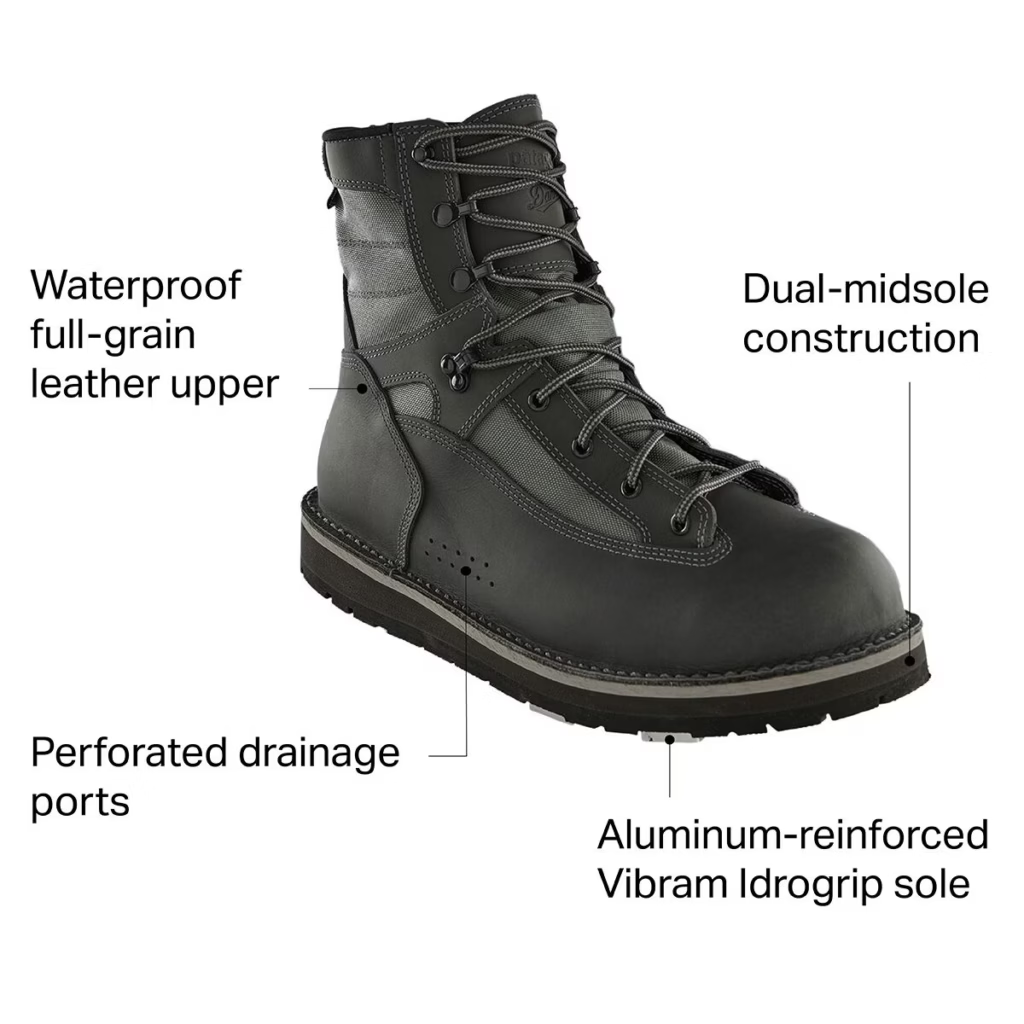
I settled on Korkers, which in general I liked, but they didn’t quite feel the same. Oh, they were certainly innovative and I wondered what the cobbler would have said about the technology they offered – the Boa “no lace” system, the quick-change soles, the modern look and use of plastics, and even the rear-entry style of their most advanced offering. There were others too, offering soles of high-tech rubber made by Michelin, no less. And then I stumbled on a new joint offering by Patagonia – their line of boots made by Danner. Danner’s take?

What lasts a lifetime? The best wading boots need to be ultra-comfortable and supportive for long days in heavy water. They should grip subsurface terrain, muddy trails and the occasional cross-stream log. They must drain quickly and avoid holding excess water. And on top of being tough as nails, they need a lifetime measured in decades. When Patagonia approached us to partner on the Foot Tractor and River Salt wading boots, we knew it was the start to something good.

The Patagonia / Danner Foot Tractor

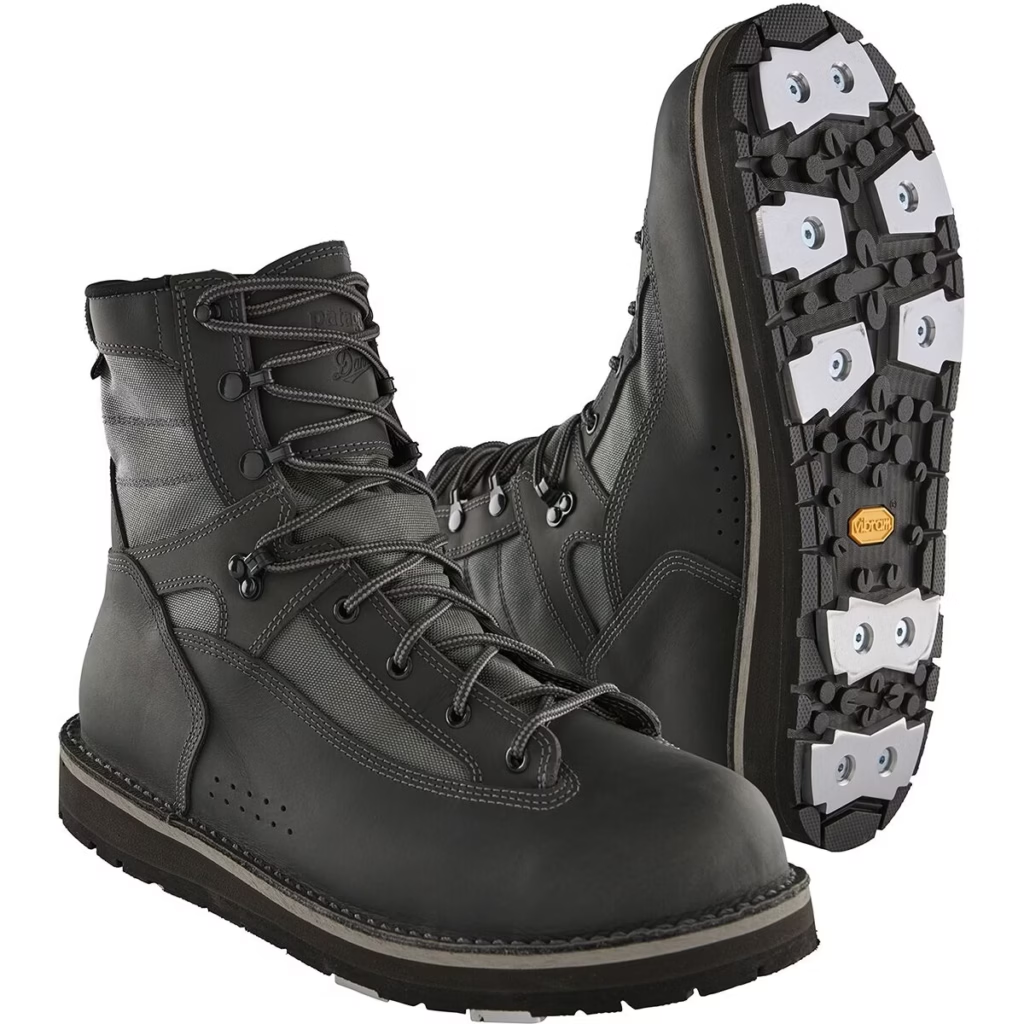
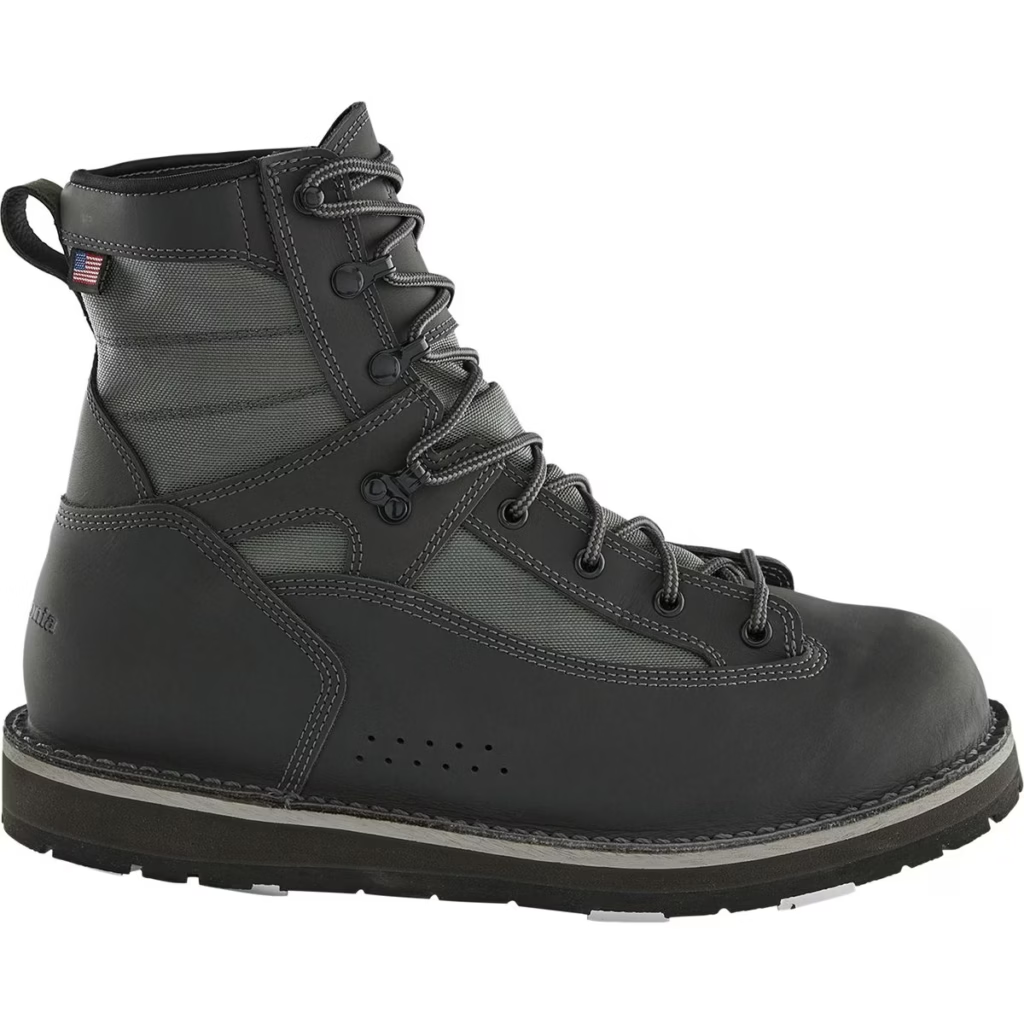
Launched in 2019, this was to be Patagonia’s first-ever brand collaboration with Portland, Oregon-based Danner, producing two wading boots built in the USA: the Foot Tractor designed with a heavy-duty aluminum bar sole for big rocky rivers, and the much lighter River Salt, designed for saltwater flats. Both featured stitch-down construction, full-grain leather, a number of small holes to drain water from inside, a variable lacing system with traditional eyelets on the forefoot and an additional quick lacing system in the ankle area, and best of all, they were resole-able — a rare, sustainability-focused feature in wading boots.

They are widely considered among the best wading boots ever made for durability and repairability. Fly fishing forums note these boots were still holding up after 5–6 seasons of hard use for owners who bought them. They were not cheap, however, fetching a price of $450 to $500.

Apparently, the price was too much for most anglers and Patagonia quietly moved on from the Danner partnership and launched a new collaboration in 2023 — the Forra wading boot, built with Italian bootmaker Fitwell. The Forra is lighter, more hike-oriented, and runs $299, signaling Patagonia shifted focus toward a more versatile, less expensive lighter-weight boot.

So, in my own nonsensical way to honor the cobbler, I researched whether any of these Danner boots were still available. To my surprise and delight, I found some at Backcountry.com. There were a few “foot tractors” in my size discounted 30% from the original price of $499. Most would still cringe at the discounted price, but I thought, what the heck for a boot that could last me the rest of my wading days on this good earth.

And so, with the ease of a click that is our modern-day buying experience, I purchased a pair with a nod to the Main Street cobbler. They’ll arrive soon enough and ooze the aroma of genuine leather and fresh Vibram rubber. I think a baptism in the Salmon River this fall is fitting, hopefully the first of many, many more to come…

The Cobbler

“Remember, cobbler, to keep to your leather.”

Michel de Montaigne, French philosopher, on staying true to one’s craft.


By all accounts, it had been a great year of fishing. My logbook listed just shy of 50 trips the previous year, excluding many half hour jaunts on my backyard pond to unwind after work. So, during my early spring gear tune-up and overhaul, it didn’t surprise me that my boots were in pretty sad shape.

I contemplated, dare I say, putting them out to pasture. After all, I’d owned them since I started fly fishing some 10 years earlier. I bought them mainly for bass fishing in the rivers – a relatively inexpensive but classic design – and Hodgeman’s no less – still made in America back then. They’d served their master well, and the mantra of this throw-away society hummed away in my head as I looked them over. Those glossy catalogs of the big brand fly fishing purveyors sell a compelling story – faster, lighter, better, tougher…

Oh, the places they took me…

The fly rod may be the heart and soul of a fly fisherman, but its his boots – the workhorse – that get him where he needs to be. They take the most abuse – the lion’s share of wear and tear of all a fly fisher carries. They are rarely in the picture of the beaming fisherman holding up the bounty of the day’s trip. And at the end of the day the weary fisherman unceremoniously sheds them, and stows them out of the light, beneath his waders, the Rodney Dangerfield’s of the angler’s gear – not getting a whole lot of respect. But like the weathered hands of a farmer, a well-used pair of boots has a story. To anyone who sees them, they speak experience astream. And they get better with age – fit better and somehow feel better. So, for these reasons, and the outright economic prudishness these times demand, I reconsidered the death sentence I was about to hand down…

There’s an old shoe repair store on the mostly bypassed main street of my town. The stores that surround it are largely what you’d call mom and pop businesses. Some storefronts are shuttered looking for new owners, the victims of the big box retailers that now line the parkway to the east. This little place sits among them – a classic sign marking its existence. It is busier than one may think.

You won’t find Gucci here, but he could repair them…

So, I went there one day on lunch break, boots in one hand, new Hodgeman’s felts in the other. Inside, the place breathed leather, shoe polish, and glue. Behind the counter was a doorway, a window into the lonely world of the cobbler. In the back of the shop was a long workbench, shoe anvils, all types of tools – awls, picks, and mallets – and racks of laces, shoemakers stitching, and leather. To the left of the counter were the fruits of true craftsmanship – neatly set in racks, tags hanging with names of owners. Every shoe, boot, belt, and handbag was polished. I began to feel good.

Inside that door waits a true cobbler…

The cobbler soon emerged from the back, clad in a heavy leather apron, workshirt, and brimmed hat. His whole appearance, including the neatly trimmed beard covering his jaw, seemed Amish, though I couldn’t be sure, and his hands testified to his work ethic – rough, calloused, and black with polish. His demeanor was pleasant. He studied my boots, turning them in his big hands – pulling the tongue back, examining the sides.

That my boots needed to be re-soled was apparent. The felt was worn thin and, in some places, de-laminated from the boot bottoms. But it’s what I didn’t tell him that he seemed to focus on. “I can re-glue the inside sole”, he said. He continued examining my boots, noting how the stitching on the outer sides was frayed and, in some cases, parted. “I’ll re-stitch these here”, he added. We settled the particulars – I could pick them up in a week. He marked a tag with my name and phone number and set them in a rack of accumulating work. He asked where I fished. The Susquehanna he was not too familiar with – he had canoed a few local lakes, but not the rivers of the Southern Tier. So, for the next half hour I told him about the fishing – the big smallmouth bass, walleyes, channel cats, carp, and musky that could be caught, and then about the wildlife that could be seen – mergansers that flew like sea-skimming missiles up the river and the osprey that dove straight into the river like a rock dropped from the clouds and the eagles that cast big shadows where they flew, and the great blue herons that at a distance in the early morning mist looked like hunched old fisherman working a pool. All these things I had seen because of my boots.

A week later I returned – a sunny spring day full of promise. I picked up my boots, newly clad with bright white felts, neater in appearance, restitched, all put together, and ready for work. The fee was so nominal I can’t recall it now, but for the memories they’d bring me, I should have paid a hell of a lot more.

The Last Good Country – Part 2 of 2

Part 1 of this post covered the first four days of my Bighorn River fly fishing trip in mid-September of 2017. My brother-in-law and I fished those days on our own and did pretty well. With some initial successes under our belts, we couldn’t wait to spend some time with guides provided by Eastslope Outfitters.

The Old Hookers Guesthouse – a true fly fisher’s home away from home…

We checked in to the Old Hookers Guesthouse on Tuesday afternoon. We each had our own well-appointed bedroom and bathroom and the run of the house. The house is a very roomy split level – the basement floor had a convenient walk-in to a rod/wader room and utility room, perfect for stringing and storing your fly rod, donning your wading gear, and grabbing a few for the road from the “beer fridge”. Adjacent to the utility room were two of the five bedrooms in the house and a very comfy family room. The conveniences provided at the guesthouse impressed me – cleaning supplies of all types, a stack of cloth patches for line cleaning, and even spare waders and boots, if needed. Upstairs was another family room with fireplace, large kitchen, and dining room, as well as 3 more bedrooms with private baths.

Kent, Jeff’s co-worker and part of the original “10 year group”, had joined us on Sunday afternoon and fished with us on Monday. Kent arrived minus a prized fly rod, lost somewhere in the luggage on the flight to Billings. He was able to replace it with a brand new Sage, on sale at the Billings Cabelas. On Tuesday, the rest of the group trickled in – this included Dave, another of Jeff’s coworkers, and Jace and his daughter. The group represented a diverse mix of angling experience, from beginner to advanced angler. Fortunately, Jim and Joyce’s team of guides handled the mix of experience exceptionally well.

After everyone settled in, our cook prepared hors d’oeuvres and the beer and wine began to flow. This was a nightly ritual. Jeff and I had considered fishing that first evening, but we knew we’d be up early, so we decided to relax with the rest of the group, enjoy dinner, clean our lines, and get to bed early. It was customary for Jim and Joyce to stop by every evening around “happy hour” and check in with guests – a very nice touch. Besides getting to know their guests, they also used that time to make arrangements for the next day, including pairing anglers with guides.

Wednesday started early with coffee and a light breakfast and it wasn’t long before the guides pulled up, drift boats in tow. For my first day, Jeff encouraged me to fish with Jim, aka “Stretch”, while Jeff went with guide Jason and fellow angler Dave. Kent accompanied me for the day. Jace and his daughter went with Tyson. The two wanted to fish together and Tyson ended up being a perfect match for the mix of their fly fishing abilities.

Looking downriver at daybreak from Jim’s drift boat.

Jim does double-duty as Eastslope co-owner and guide. I was eager to fish with him: Jeff had nothing but raving reviews from previous years and claimed Jim could see fish where none seemed to exist. We launched that first morning from the 3-mile access and were soon drifting downriver while Jim talked about the plan for the morning.

Jim, left, rigs Kent up with a tandem trico dry fly set-up.

Jim talked about the trico hatch and the area of the river we’d fish. He rowed us downriver past cattle, grazing on the aquatic grass, and white pelicans getting set for their own fishing. After a 30 minute drift, we anchored along the river bank and got out to wade and sight fish. Jim set Kent and I up with tandem trico dry flies. He preferred to fish the dropper on 6X tippet. In his opinion, this removed doubt as to whether 5X was too much and putting the fish off. He also used desiccant on the flies pretty regularly so they would float well. He started me fishing and then walked with Kent upriver to get him situated.

Looking upriver on the Bighorn, with Kent fishing along the weed edges. Big pods of browns cruised upriver feeding in much the same way Jeff and I had observed on our first days on the river.

Eventually, Jim waded back down to me. He scanned the river for fish, his height and slightly stooped posture making him look like a big blue heron on the stalk. It wasn’t long before he sighted some browns slurping the steady downstream drift of trico spinners. He had me quietly move into position below them, then instructed me to put the flies just 6″ ahead of the fish at the tail of the pod. It was maddening seeing these fish feed with reckless abandon and at times almost bump my fly as they took the real thing. But both the odds and fishing Gods were in our favor: I watched my point fly disappear in a rise. “Set” was the word Jim loved to use to tell you when to set the hook on a take. And following his timing cue was a sure way to stick a brown.

Kent points to a mat of spent trico spinners pooled up in the river edge weeds.

I landed two nice browns under Jim’s guidance and though I was pleased as punch at the early success, he wasn’t satisfied with the number of shots I was getting. The pods were very sporadic in his opinion, popping up, going for a few minutes and then vanishing, reappearing elsewhere. He told me to continue to look for rising fish while he headed downriver to scout out another area. I managed another hook-up before he called me from the high riverbank to tell me to follow him downriver. He led me to a nice run below the broad tail-out where we’d previously fished. As we waded back upriver, I could see a large pod of fish – at least a dozen or two – gulping tricos along the weed edges. Jim had me work the lower fish first. The tandem rig did its job and we picked away at the pod, yielding many quality browns in the 16″ – 18″+ range. Partway through the morning, Jim had me change to a glass bead sunken spinner. This fly would sink and the lead trico emerger would act as an indicator when a trout picked up the sunken fly. It worked like a charm and I enjoyed a little dry fly indicator fishing.

Jim gives my new Orvis Helios 2 6 weight fly rod a test cast. He loved it…

The hatch began to dwindle as morning faded. The pods of voracious browns were gone except for an occasional and sporadic riser. Jim suggested we move on down the river.

We strung up our streamer rods and began casting. Jim pointed out one area where a fellow guide had a client hook into an 8 pound brown – the biggest of the year it turned out – that they fought quite a ways down the river. But this big fish went to a “hacker” – a client with little fly fishing skill. Jim’s guide friend had wished it on someone like Kent or I. Beginner’s luck is apparently alive and well even on the Bighorn River!

Kent and I didn’t move a fish with streamers. We stopped bankside for lunch and enjoyed a delicious venison meatloaf sandwich, salad, chips – a gourmet river meal if there ever was one (word was Jim makes the lunches). After stuffing ourselves, we pushed off and drifted downriver, ready to give nymphing a shot.

Jim anchored his boat tight to a high bank and along a fast and deep run. He rigged Kent and I up for nymphing with an interesting sliding weight, similar to a steelhead slinky but much smaller and made with lead putty. The nymph rig was “tractor trailer” under an indicator. Initially Jim had planned on using scud patterns, but Kent wanted to try the split case PMD that had performed so well for me when I was fishing on my own.

The split case PMD – a very effective Bighorn pattern…

I wondered whether the split case PMD would work wonders like it had originally for me. It didn’t take long before Kent was hooked up, validating the nymph’s effectiveness. I started hooking up as well, including a really nice rainbow lost at the net.

Kent, seen here, is nymphing the deep and fast run just downstream from where we anchored for lunch.

We ended the day fishing streamers to the takeout. Once again, the streamer bite was not there, but after a lot of fish in the net, it was nice to just cast away and enjoy a beautiful river. Jim proved to be a great guide – knowledgeable, wise in the ways of trout, patient, and fun. His forte is dry fly fishing, so if the hatches are on, he’s the guide you want for at least one day on the Bighorn.

An abandoned farmhouse on the Bighorn River…

Jeff had fished with Jason that first day. Relatively new to the Eastslope stable of guides, Jason was also knowledgeable, professional, and very capable. Jeff had good fishing with Jason and my second day of guided fishing would certainly validate that.

Jason picked us up bright and early on Thursday and discussed his plan of attack as we drove to the river. We would fish the same red bluff area that he’d taken Jeff to the previous morning. The hatch had been good there and the fish were willing. After that we’d fish streamers.

We reached the red bluffs and anchored up. Jason sent Jeff upriver to a spot that had some fish already working. He then climbed the steep bank with me in tow. We walked a trail downriver to a spot where the feeding was on. We descended below these fish and carefully waded up river towards them.

Jason rigged me up a little differently than Jim had. In Jason’s world of dry fly fishing the Bighorn, there was no need to use less than 5X tippet and in some cases he preferred 4X or even 3X. An interesting aspect of fishing with multiple guides is that one gets exposure to a variety of fly fishing methods, techniques, and tactics. Some differ significantly in their approach and views, but all of that is good for the angler who will listen.

Jason used his own flies and I could immediately tell he was a skilled fly tier. We fished a tandem rig of trico spinners and emergers. He had me work the pod from the tail but once again, the fish I hooked did not seem to spook the other risers. Jeff and I fished the hatch well, netting numerous good fish, losing some as well. Jason taught me to pick up the slack after every cast and to stay relatively tight to the fly to ensure a good and quick hook-set. It turned out to be a stellar morning.

As the morning hatch petered out, we set out downriver and switched over to streamer fishing.

Jeff hangs out in our drift boat while we break for a shoreside lunch.

Jason set me up with a sparkle minnow streamer (his own tie) as the lead fly.

The Sparkle Minnow had amazing movement and flash.

He then tied off the first streamer an 18″ section of tippet to which he tied a smaller streamer called, of all things, “the grinch”…

The Grinch – a streamer that might not steal Christmas but certainly will steal some trout…

Together, these two flies seemed like a perfect one-two punch; the sparkle minnow moving the fish and the grinch giving any hot trout a second chance if they missed the lead fly. Most fish were caught on the grinch but a few couldn’t resist the sparkle minnow streamer.

Jason was an excellent streamer guide, calling out where and how we should fish the river as we drifted. He’d say, “I want you to fish left here, give it a 5 second count”, “be ready to cast to the bank”, or “pick your flies up while we drift through this shallow riffle.” We fished the deep parts of the river using a sink-tip line, letting the flies sink up to a 10 second count depending on river depths. Jason also had us pounding the banks on a relatively short and fast cast. The visual of watching a nice brown peel off the bank to chase down a streamer made the repeated casting well worth it, even if they didn’t always take. Jason explained that when fishing the bank, you want to cast slightly behind the boat (upstream) so the fish has time to intercept the fly naturally and turn with the current rather than making the fish chase upstream. He also corrected my long strips, instructing me to work the fly in very very short staccato strips that better imitated baitfish movement. He explained the rationale very simply: how many baitfish can out-swim a big brown? By the end of our float, Jeff and I had done reasonably well but Jason felt the bite was off.

Thursday evening was windy with big gusts firing off the mountains and roaring across the river valley. Dust was blowing everywhere – a sure sign a front was coming through. Sure enough, as forecast, Friday dawned very cold and rainy – highs dropped from the 90’s to the low 40’s in just 2 days! Jim and Joyce’s advice to pack and be ready for almost any kind of weather was spot on.

Jason picked Jeff and I up early Friday morning at the lodge. As we drove out of Fort Smith he discussed his plan. He was concerned that the heavy overnight rains might begin to cloud up the water and that it would only get worse the farther downriver we fished, so rather than start at the 3 mile launch, he wanted to launch at the Yellowtail dam access, drift and strip streamers, then pull out at 3 mile and do another loop.

The after-dam access. This is the highest up the river you can launch on the Bighorn.

We were fine with the plan. Once we launched we were immediately hit head-on with a stiff cold wind that came right up the river. Though Jeff and I had foul weather gear on and had layered up under our waders and rain gear, the rain wet any exposed skin and the cold winds soon numbed fingers and faces. Neck gaiters and wool hats helped, as did the heavier work of casting and stripping tandem streamer rigs on sink tip lines.

Jeff cinches down while guide Jason re-ties a streamer. Jeff, from Northern Cal, was not so used to this type of fishing weather. For me, a north-easterner, it was not so bad. As the saying goes, “there’s no bad weather, just bad clothing“…

Despite the weather, I enjoyed the streamer fishing. Jason set me up once again with the sparkle minnow streamer as the lead fly and the grinch riding tail gun.

We picked up some fish, mainly browns in the deep pools, and then came to a river braid that Jason felt might hold some good fish. This braid was often overlooked apparently. We anchored at the end of the island and wade-fished the braid. I could see some fish periodically rising to something very small but nymphing this stretch was not moving any fish. After a while I asked Jason if I could try throwing a streamer. He was all for it so I pulled out my Helios2 6 weight and gave it a shot.

I walked up to the top of the braid and made casts across and up, letting my streamer sink and swing down. Occasionally I short-stripped across, and sometimes I did this on the swing. Just below the head of the braid was a large log-jam and perfect cover for trout. I worked my streamer through this area and had a solid splashy take.

The first of 6 trout from Jason’s river braid…

Repeated swings down the length of the braid and below where the water cut into a red clay bank brought many strikes – some short and some solid – for a total of 5 browns and 1 rainbow.

This rainbow smashed the sparkle minnow on the swing.

We continued our drift, throwing streamers, and hit the 3 mile pull-out at noon. We were pretty wet and cold and per Jason’s suggestion, drove back to the lodge to eat our lunch in the comfort of the dry and heated rod and wader room.

Jeff was done with fishing at that point. His rain jacket had been not much more than a wearable sieve to keep the big raindrops out; he was soaked through from the driving rain. I was pretty dry and wanted to give the fishing another round.

And so we went – just Jason and I – back out into the gray cold rainy afternoon. It was the same drill; casting, stripping, casting again, but oh how good it was to get out one more time. I caught some nice browns and lost a really good rainbow that I considered a final “thanks” offering to the river.

We all left the lodge the next day for home. I was the only one heading eastbound – the rest traveled westbound by plane or car. By 2 o’clock that afternoon, I was wing-borne and climbing high over Montana. From my window seat I got one last look at the khaki high desert landscape marked by little veins of green and gold. Then we were in the clouds and the last good country was gone. But, like Hemingway’s own northern Michigan woods, I now realized that one never really loses such a place.

Ernest Hemingway posing with a nice trout caught from the East Branch of the Fox River. This river was the river portrayed in his classic short story, “Big Two-Hearted River.” And it was the very definition of Hemingway’s “last good country.”

Credit: “Ernest Hemingway Collection. Photographs. John F. Kennedy Presidential Library and Museum, Boston”

My thoughts turned to fly fishing the Bighorn: the pods of rising browns, the trico hatches so thick they looked like rising smoke over the river, the sight of an indicator plunging down in fast water, the savage strike of a big trout intercepting a streamer on the swing, the company of friends, good food, a cigar and bourbon on the deck, the sun setting ablaze on high desert mountains, the good tired feeling after fishing hard all day, a worn-out casting arm, and the unfailing work of great guides. And I decided then, I’d return as long as I could to refresh my fly-fishing soul in my last good country.