Mama always said there’s an awful lot you can tell about a person by their shoes. Where they’ going, where they been. I’ve worn lots of shoes. I bet if I think about it real hard, I could remember my first pair of shoes. Mama said they’d take me anywhere. She said they was my magic shoes.
Forrest Gump
I got out of the river that evening, happily tired, and made my way back to my car with an 18″ smallmouth and channel cats that pushed the 30″ mark fresh in memory. The wading had been precarious in the run I had chosen to fish, but it was all well worth it. My boots had taken me there, as they had so many other beautiful and productive places and safely got me out.
I had been wading wet for the last few weeks now that summer was in the fore and I liked the fact that I didn’t have to mess with waders. As I pulled my boots off, I noticed for the first time that I had finally broken through the toe of my left boot. These old Simms boots had taken me fishing for 7 years and were finally about done. I had enjoyed them as much as I did the places they carried me and I didn’t want to say goodbye to a pair of old friends just yet. Then I remembered the cobbler down on Main Street. Perhaps he could work the magic he once did for me on an old pair of Hodgeman’s.

I hadn’t visited the cobbler for a long while. One of the great quality conundrums is that exceptional quality can sometimes backfire on a business, particularly a small one. Long lasting shoes, for one, are a thing of the past in today’s throw-away society. My last pair of boots were brought back from extinction thanks to true craftsmanship and those visits to my cobbler saved me the cost or replacement several times over for a very small sum of cash handed, almost with guilt, over the counter.
So one fall evening I drove down to Main Street in Vestal, another Main Street largely bypassed and forgotten and mostly barren now save a nail salon, an antiques dealer, a Chinese food takeout, and what I thought would be my cobbler. But sadly, it wasn’t so. The old shoe-shaped sign was now worn, weathered, and somberly saying “out of business”. The door still listed the hours but taped to it was a sign stating, “thanks for your business, it’s time to move on.”
I left the place disappointed. My boots were truly gonners unless I could find another cobbler. I searched online over the next few days to no avail, leaving me no choice but to purchase new.
I settled on Korkers, which in general I liked, but they didn’t quite feel the same. Oh, they were certainly innovative and I wondered what the cobbler would have said about the technology they offered – the Boa “no lace” system, the quick-change soles, the modern look and use of plastics, and even the rear-entry style of their most advanced offering. There were others too, offering soles of high-tech rubber made by Michelin, no less. And then I stumbled on a new joint offering by Patagonia – their line of boots made by Danner. Danner’s take?
“What lasts a lifetime? The best wading boots need to be ultra-comfortable and supportive for long days in heavy water. They should grip subsurface terrain, muddy trails and the occasional cross-stream log. They must drain quickly and avoid holding excess water. And on top of being tough as nails, they need a lifetime measured in decades. When Patagonia approached us to partner on the Foot Tractor and River Salt wading boots, we knew it was the start to something good.“
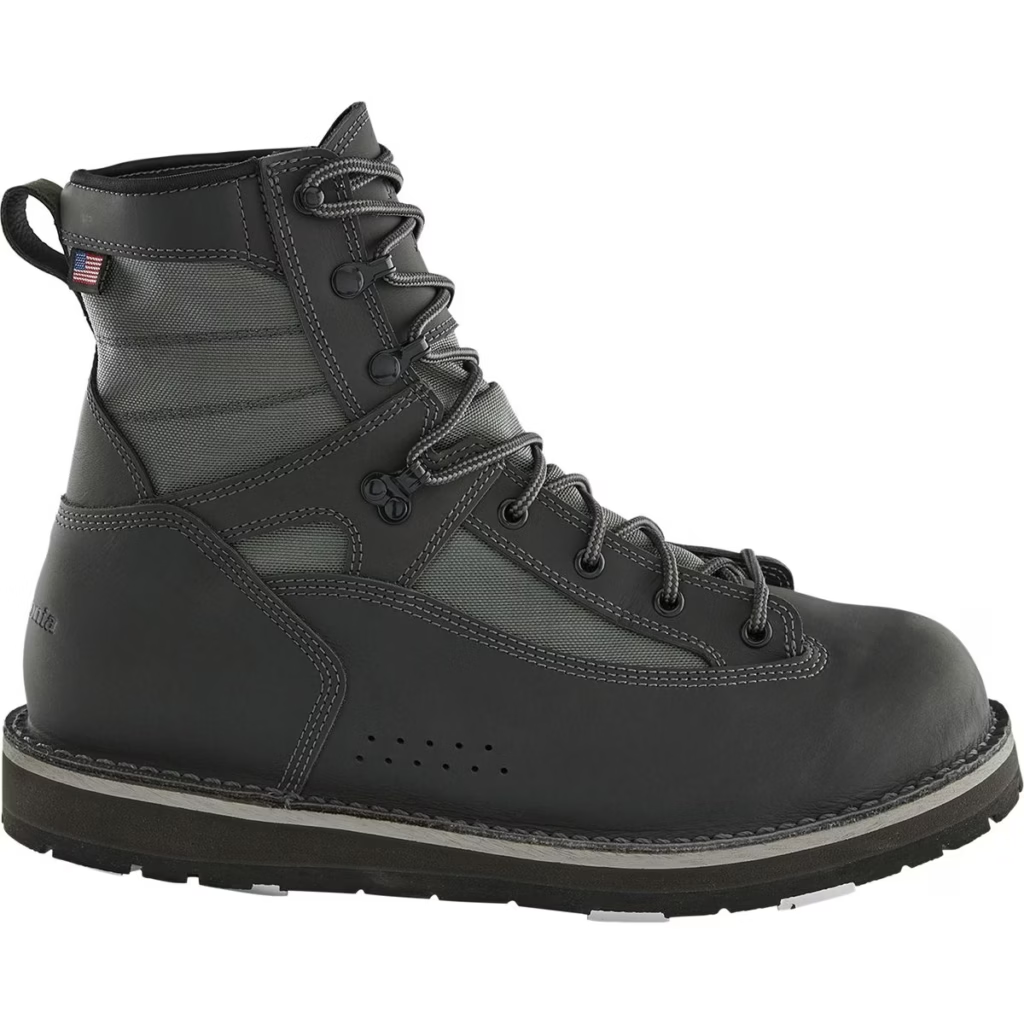
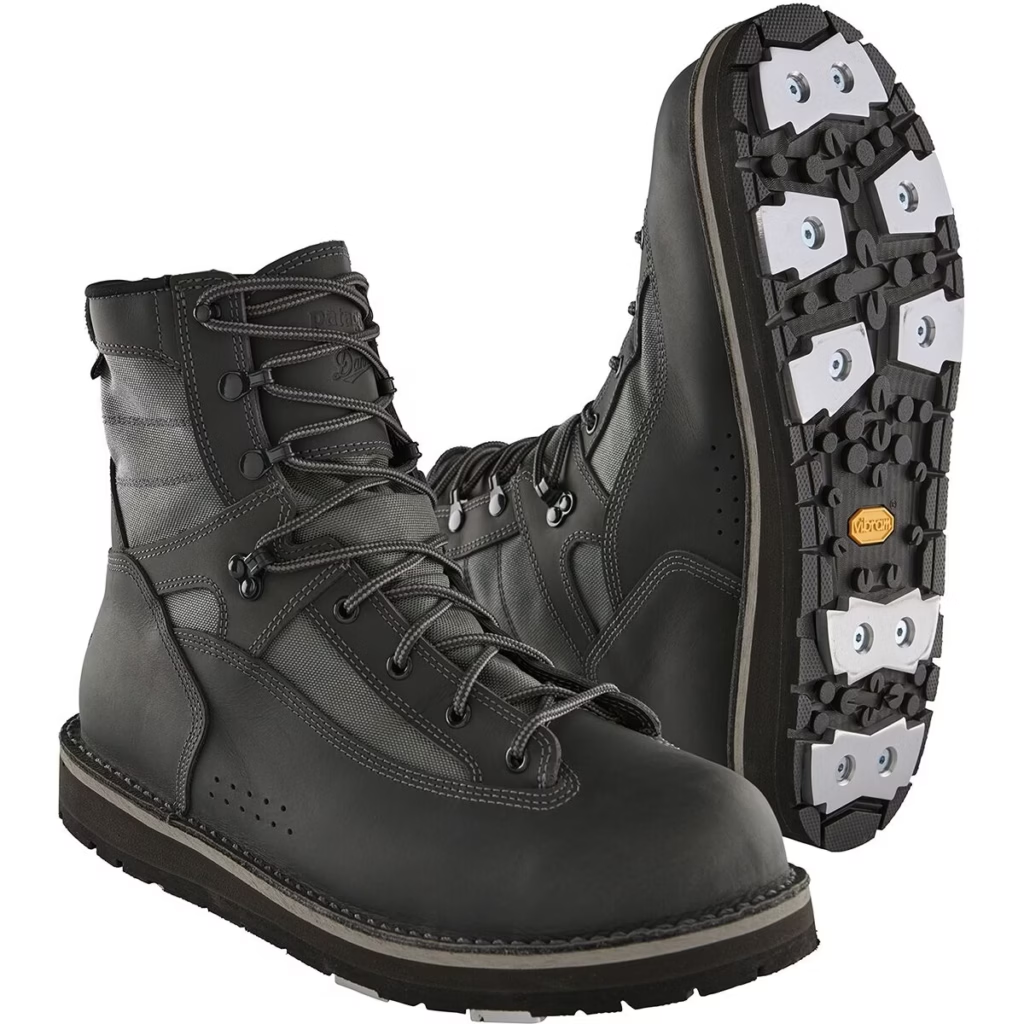
Launched in 2019, this was to be Patagonia’s first-ever brand collaboration with Portland, Oregon-based Danner, producing two wading boots built in the USA: the Foot Tractor designed with a heavy-duty aluminum bar sole for big rocky rivers, and the much lighter River Salt, designed for saltwater flats. Both featured stitch-down construction, full-grain leather, a number of small holes to drain water from inside, a variable lacing system with traditional eyelets on the forefoot and an additional quick lacing system in the ankle area, and best of all, they were resole-able — a rare, sustainability-focused feature in wading boots.
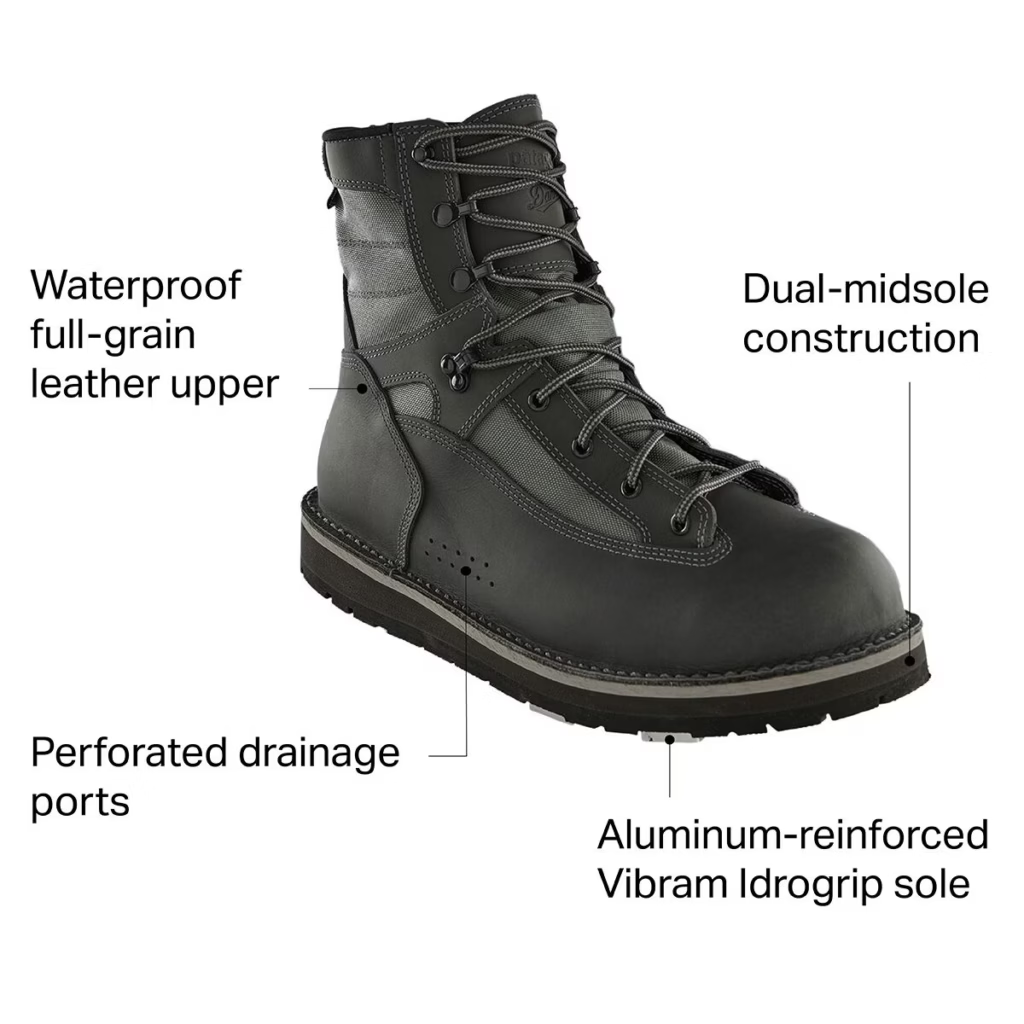
They are widely considered among the best wading boots ever made for durability and repairability. Fly fishing forums note these boots were still holding up after 5–6 seasons of hard use for owners who bought them. They were not cheap, however, fetching a price of $450 to $500.
Apparently, the price was too much for most anglers and Patagonia quietly moved on from the Danner partnership and launched a new collaboration in 2023 — the Forra wading boot, built with Italian bootmaker Fitwell. The Forra is lighter, more hike-oriented, and runs $299, signaling Patagonia shifted focus toward a more versatile, less expensive lighter-weight boot.
So, in my own nonsensical way to honor the cobbler, I researched whether any of these Danner boots were still available. To my surprise and delight, I found some at Backcountry.com. There were a few “foot tractors” in my size discounted 30% from the original price of $499. Most would still cringe at the discounted price, but I thought, what the heck for a boot that could last me the rest of my wading days on this good earth.
And so, with the ease of a click that is our modern-day buying experience, I purchased a pair with a nod to the Main Street cobbler. They’ll arrive soon enough and ooze the aroma of genuine leather and fresh Vibram rubber. I think a baptism in the Salmon River this fall is fitting, hopefully the first of many, many more to come…


Recent Comments